

This article was contributed by David Baumgartner as part of a local series on astronomy.
Everywhere you look, it’s planets, planets, planets. That pretty much gives you an idea of what’s in store for the night skies in November. In order, from the setting sun stretching out to the east, you will see Venus, Pluto, Saturn, Jupiter, Neptune, and Uranus.
But wait, what about Mercury and Mars? Well, Mercury is playing the loner the rest of this month. It will be in the early morning portion of the sky, but by December it will be showing up following the sun as it sets in the evening.
Mercury is a fast-moving planet. This speedy body travels so quickly around our sun that it doesn’t get a chance to stay around very long. So make sure you get a glimpse of it before it’s gone again.
As far as Mars goes, it will be too close to the morning sun to observe during most of this month but will return to the morning sky by month’s end.
There actually is one more planet that is visible to us. It’s the big one we are standing on, the Earth. Okay, so it’s not in the night sky. Or is it? It’s dark, and you are standing on the moon looking toward Earth. Well there it is, the Earth in the night sky. I know that is stretching things somewhat, but it always makes for a good trivia question.
First in line is the very bright planet Venus. I can’t tell you how many calls I have received from curious onlookers about this bright star-like object in the western horizon late in the evening, or early morning.
Is it a UFO? Maybe a comet heading toward us getting ready to end our word as we know it? Well, It’s none of those. Thank heavens (a little play on words there). That bright star-like object would be Venus. Other than the moon, Venus is the brightest regular object in the evening sky.
Venus has phases much like our moon. At the beginning of November, Venus starts out looking quite similar to a quarter moon, showing us just half of its visible surface. I guess we can call it a quarter Venus. But by the end of the month Venus takes on a small crescent look. These phases can be viewed even with some of the smaller telescopes.
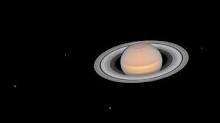
One of the most amazing objects in the sky that is available to you in your own backyard telescope, is the planet Saturn. This beautiful picture in the sky is one that remains with first-time viewers for their entire lives.
One evening I had some grade school children over to take a look at Saturn. I remember one little guy saying while looking at Saturn, “look at this, it almost looks real.”
I’m not sure what he meant by that, but he was certainly impressed with what he saw. He actually looked at the end of the telescope to see if I had fixed a picture of the planet on it.
I enjoy watching the responses of young and old alike when they see Saturn for the first time. Maybe when Saturn comes to this same location again on its 29.5-year trip around the sun that same little guy, now not so little, will think fondly and remember that old man who showed him his first view of the ringed planet.
And just maybe at that time he will have his own telescope and will share the same views with some other little guy.
So it’s late at night and you still haven’t had enough of the wonders of the heavens. Well then, it’s time for the last of our easy-to-view planets and it’s the mightiest of them all, ranking second in brightness only to Venus.
Jupiter is the largest planet in the solar system and remains visible just after midnight on Nov. 1 and 11 a.m. by the end of the month. This giant provides a wealth of entertainment on any clear night.
It’s always interesting to watch Jupiter’s moons dancing or transiting in front of the planet. It’s not easy to see the moons themselves while in transit, but to view the shadows of those moons in the service of Jupiter is quite achievable.
The four Galilean satellites, Io, Europa, Ganymede, and Callisto, trek back and forth as they orbit Jupiter and prove to be easy targets through most 8-inch telescopes and larger, or even a pair of real good binoculars.
Speaking of an 8-inch and larger telescope, that’s just what you’ll need to observe the last three planets on our list: Uranus, Neptune and Pluto. Even with that size scope, all you may see is a star-like object for Pluto or a small bluish-green disk for Uranus and Neptune.
That is possibly the best we can expect with their distance from the sun—Uranus is 1.75 billion miles, Neptune is 2.8 billion miles and Pluto is 3.19 billion miles. And yes, that’s billions of miles. It’s hard to comprehend these distances, especially comparing them to our menial system of measurement here on Earth.
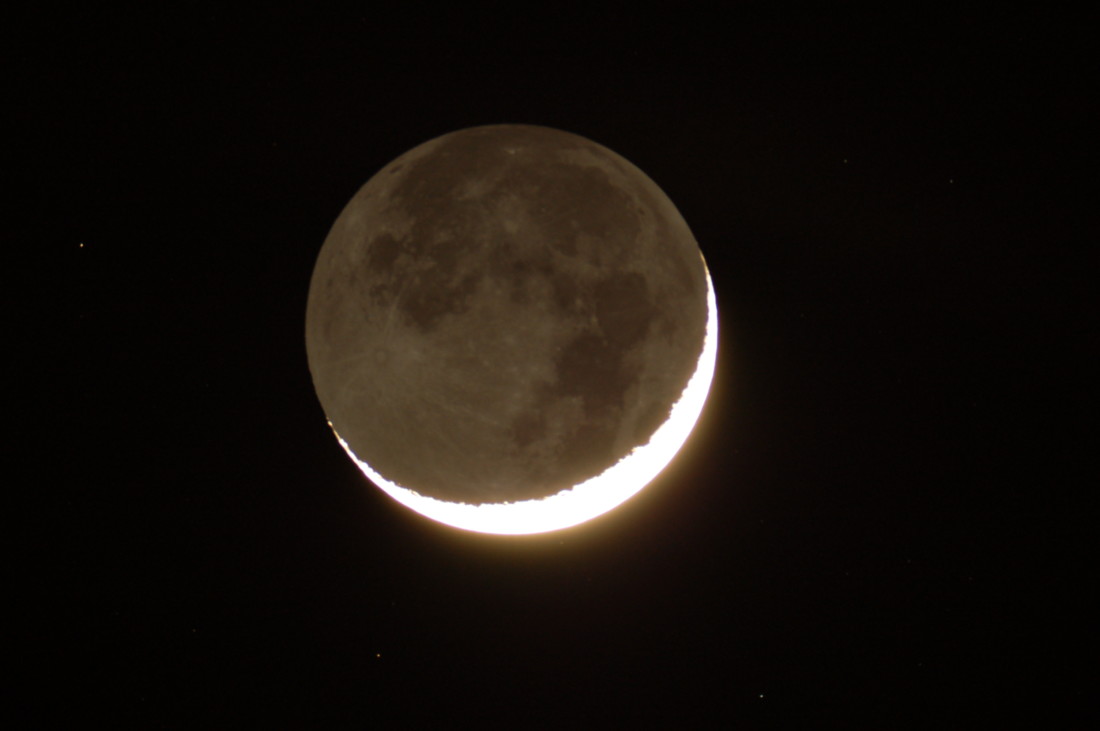
A good opportunity to take some great photos is when the moon passes by the planets. The moon is always a great guide tool for locating other objects in the sky, including planets and stars (use the list below as a guide). It does have a tendency to block out the deep-sky objects, but it does give you an idea where objects are located after the moon moves on its way.
Don’t forget to set your clocks back one hour on Nov. 7 at 2 a.m. I guess you can set them the night before, or if you would like I could come by at 2 a.m. and set all your clocks back for you. Probably not the best idea.
Always remember, “Spring forward, fall back”
Clear skies.
What’s going on up there this month?
Nov. 3: Moon passes 1.2 degrees north of Mercury
Nov. 4: New moon
Nov. 5: Moon is at perigee (222,975 miles from Earth)
Nov. 7: Moon passes 1.1 degrees north of Venus
Nov. 7: Daylight saving time ends (turn ’em back)
Nov. 10: Moon passes 4 degrees south of Saturn
Nov. 11: First quarter moon
Nov. 11: Moon passes 4 degrees south of Jupiter
Nov. 13: Moon passes 4 degrees south of Neptune

You must be logged in to post a comment.