


Answering criticism that citizens have had a hard time gleaning information from its website, as well as county staff’s unending efforts to keep up with administrative tasks, San Benito County has taken steps recently to provide more transparency and ease in public searches. According to Louie Valdez, clerk of the Board of Supervisors, the county has already begun migrating the voluminous quantity of agendas and other important files from its antiquated Questys data management system over to Novus system, which he says will vastly improve both internal and external availability.
“Questys is the software database that the county has had for several years to scan in agendas, agenda packets, ordinances, and resolutions,” Valdez said. “A fair amount of scanning was done, but the problem is that the database became relatively unreliable.”
It became difficult to conduct wide-ranging searches and keywords needed to be precise or they wouldn’t work, he said. It didn’t have the ability work in a manner that anyone who uses Google or other search engines has become accustomed to. He said every time a staff member has not been able to log into the system, they had to resort to calling the IT department and reboot the server, all of which takes valuable time.
Valdez said he went back to the vendor numerous times, but the company was not responsive. He said that when Ray Espinosa became the chief administrative officer, one of the first things he looked at was changing the database software. When Valdez was hired eight months ago one of the first tasks he was charged with doing was to help move the county from a manual to an electronic agenda management system.
“We now have a system called Novus, which is a web-based agenda management system that allows us to enter all agenda items online and all the department heads to have access,” Valdez said. “They can upload all their documents into the database, and that allows us to review, track and create workflows for each one of the items.”
Before the switch to Novus, a person had to fill out a form on paper, attach associated documents to it, and then everything would have to be scanned. Valdez said when there are agendas that can be as much as 500 to 600 pages, it’s an extremely time-consuming process. Then the entire process would stop if someone decided at the last minute something had to be added, which would necessitate taking the entire packet apart, re-ordering it, and re-scan.
The new agenda management system allows each department head to be able to enter agenda items into a virtual agenda item transmittal form, after which, each form is routed to whatever group is responsible for reviewing a particular part of the agenda content. This creates a record of everyone’s input and the ability to run reports. The capability enables the department to organize the manner in which each item is handled.
“That’s important because what I’m going to do is draft an agenda management handbook that will define all of the elements that are handled by the clerk’s office with regard to the agenda and create specific timelines so we can do that more efficiently,” Valdez said. “We’re trying to formulize how we do things and put it into a policy in a handbook and we’ll have institutional knowledge and practices that are formulized.”
The county has had the Novus system since last October and it went live in late December. If anyone goes to the website they can find the link, Novus Agendas and Minutes, that allows them to find everything in terms of agendas, packets and minutes, by a simple click on the link. Valdez pointed out a new feature, Board Details, which provides details on board members’ activities.
“We’re in the process of taking that information, which is basically a PDF file, in somebody’s filing cabinet, to putting it online,” he said. “That’s a lot of information we’re migrating over and the great thing about this system is when we go into a meeting we don’t have to go back and look for a physical file. We just go to (click on meeting icon) a meeting and it takes us to all the items for that meeting, then we click on the agenda view and this hyperlink to the agenda is now what the public will see.”
Since the Novus database has only been active since December, that is as far back as available records go. Valdez said his office will go back as far as it can, but the process is time-consuming because each item has to be entered individually. He said that while county staff may not be able to enter everything into Novus, they will be able to migrate everything that exists on the old Questys system over to the second records management software the county has purchased, called Laserfiche.
Novus and Laserfiche are separate companies, but partners to assure compatibility. As far as savings are concerned, between the two software programs, Valdez said initially it will be hard to tell because it’s never been done before.
“What I mean by that,” he said, “is that other organizations have entire teams that design the workflows for each one of the departments. We don’t have that staffing. So, what this has done for us is allow us to work with the departments without having to wait for them to bring the physical paperwork over here or to send it interoffice. We can do everything electronically. We’re measuring that (productivity and savings) by the amount of time it’s taking us to work on these items.”
He said it’s too early to say it’s more efficient than before in a measurable way because of the small staff and the inordinate amount of time it takes to design the workflows. One time-saving feature that makes the software crossover well worth the effort involves hyperlinks between documents. Where as before each document would have to be scanned separately, then someone would have to insert a link in each so the two or more—sometimes hundreds—would be linked. With the Novus software all that is required is to scan the documents and the system will automatically generate the hyperlinks. This capability has already proven to be a valuable time-saver, especially if someone wants to insert another document at the last minute.
“For each one of these I don’t have to worry about going back in to create a hyperlink,” Valdez said, “all I have to do is click agenda view and it’s done. So, when someone goes to the county website they can still see a PDF that is automatically generated by the system. But we’re not using that anymore. It’s more efficient just to go to the hyperlink. It’s all there, 24/7.”
Everything Online March 1
In addition to its compatibility issues, the files, going back decades, that were on Questys were not available online. Valdez said the new Laserfiche system will change that. Everything will be online and easily accessible starting March 1. “Laserfiche took our Questys database and they’re migrating everything over to the servers that the system runs on and there will be a public portal where people can go and take a look at all of that information that previously was not available.”
Valdez said when the Laserfiche system goes live emphasis at first will be on contracts, which he will personally enter into the database. He said the office has filing cabinets filled with contracts that have come before the board. He said there are many more at various departments that need to be added to a centralized database.
“This is important because it will give us the ability to run reports and keep track of when those contracts expire or come up for renewal or terms change,” he said, noting that are any number of contracts that no one outside of a particular department knows exists. “The only way to find out about those is to go over there and look through the filing cabinets. The whole idea is to have all contracts in one database so when we start working on the budget we’re going to know exactly how much the county has encumbered itself with regards to the amounts listed in the contracts. Right now, we have a good idea, but we don’t have a complete picture.”
While Valdez proclaimed that if a document exists in the database anyone will be able to see it, he added the caveat that the database only goes back approximately 10 years. He said the ultimate goal is to scan in as many relevant documents as possible that the county possesses.
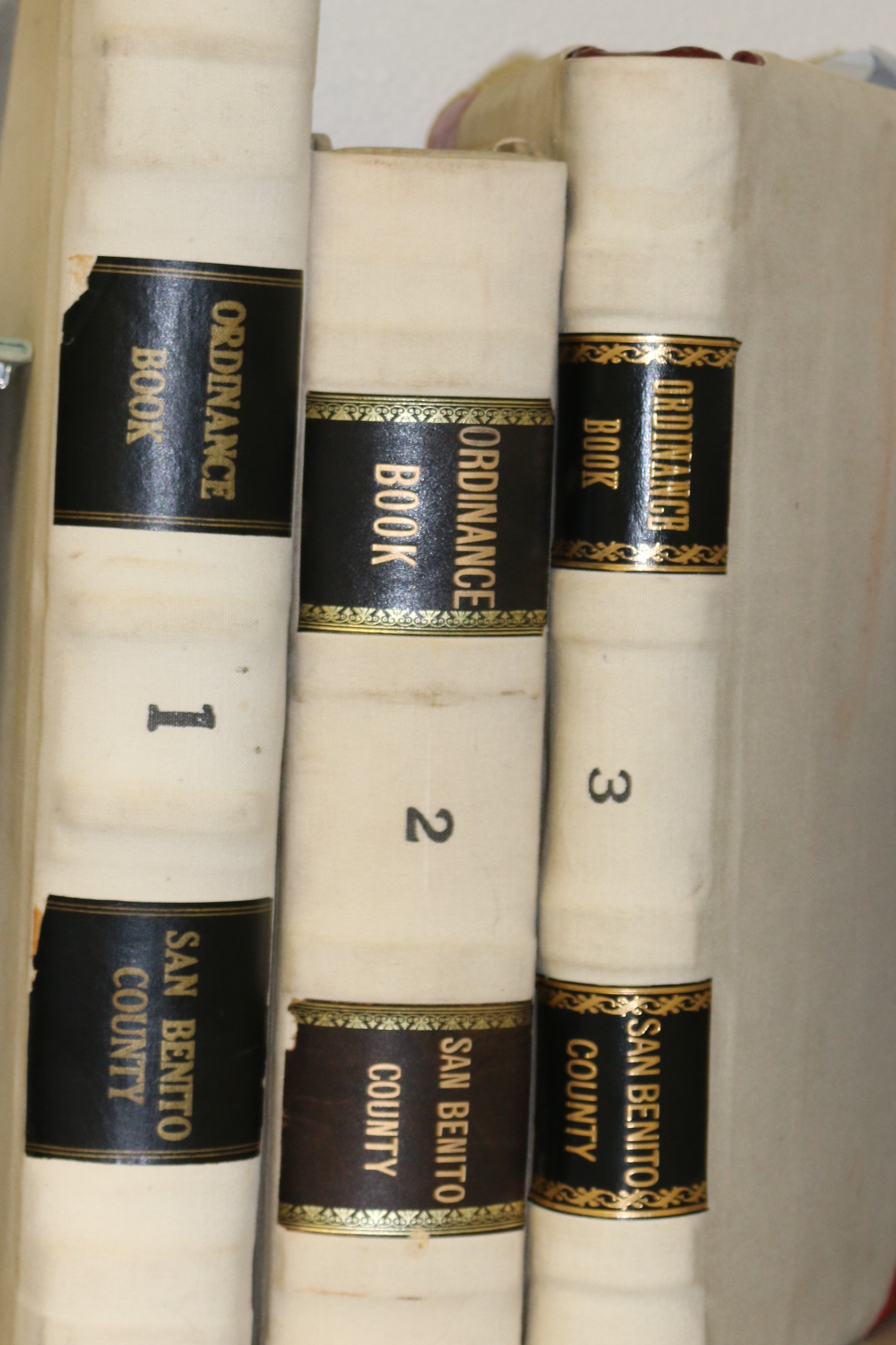
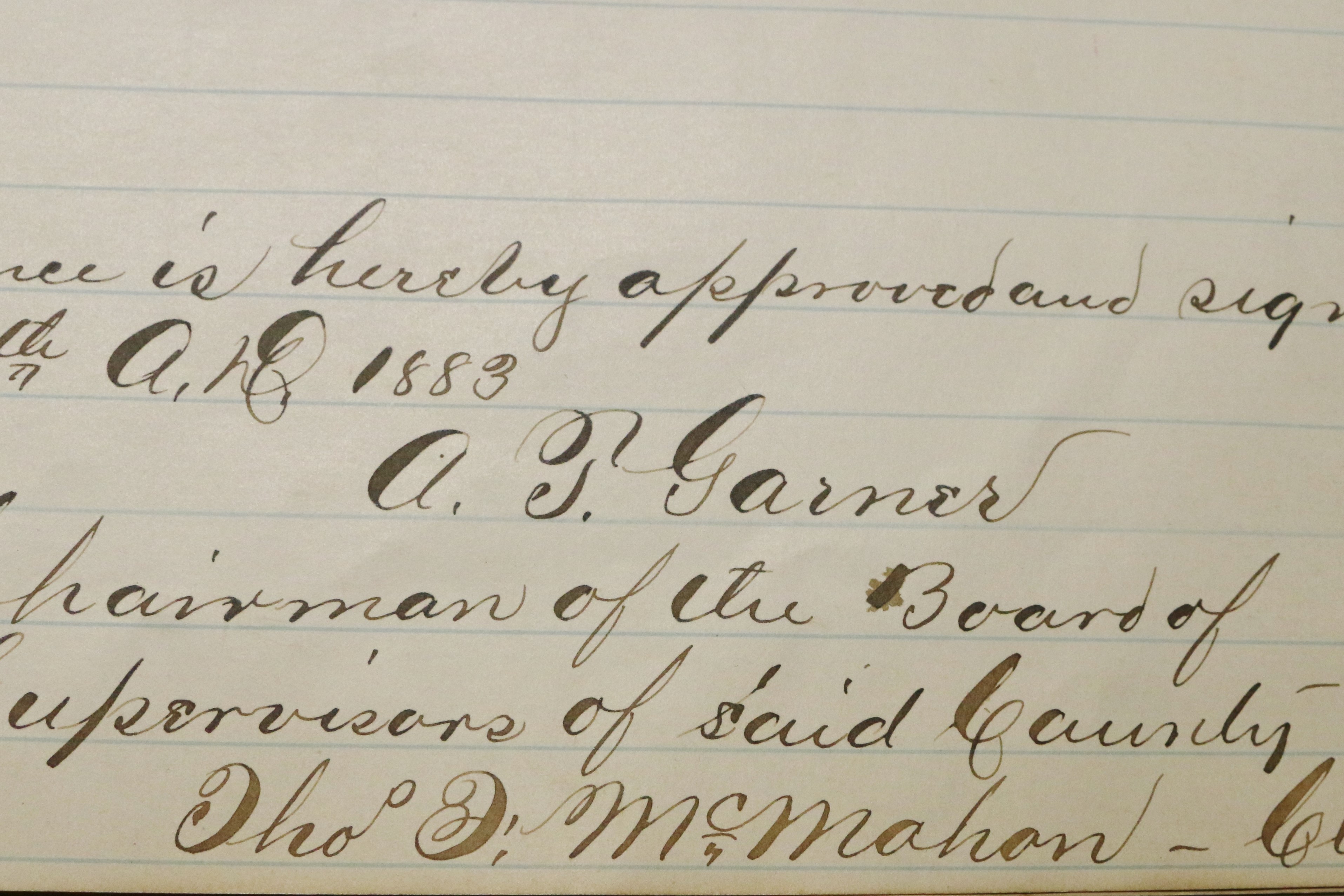
On the surface, that might seem an admirable goal, but because of a small staff and the sheer amount of documents stored in multiple locations dating back to the 1800s, the task is formidable and could take years to accomplish. Documents include beautifully handwritten council minutes going back decades, agendas, resolutions, maps, photographs, and the list goes on.
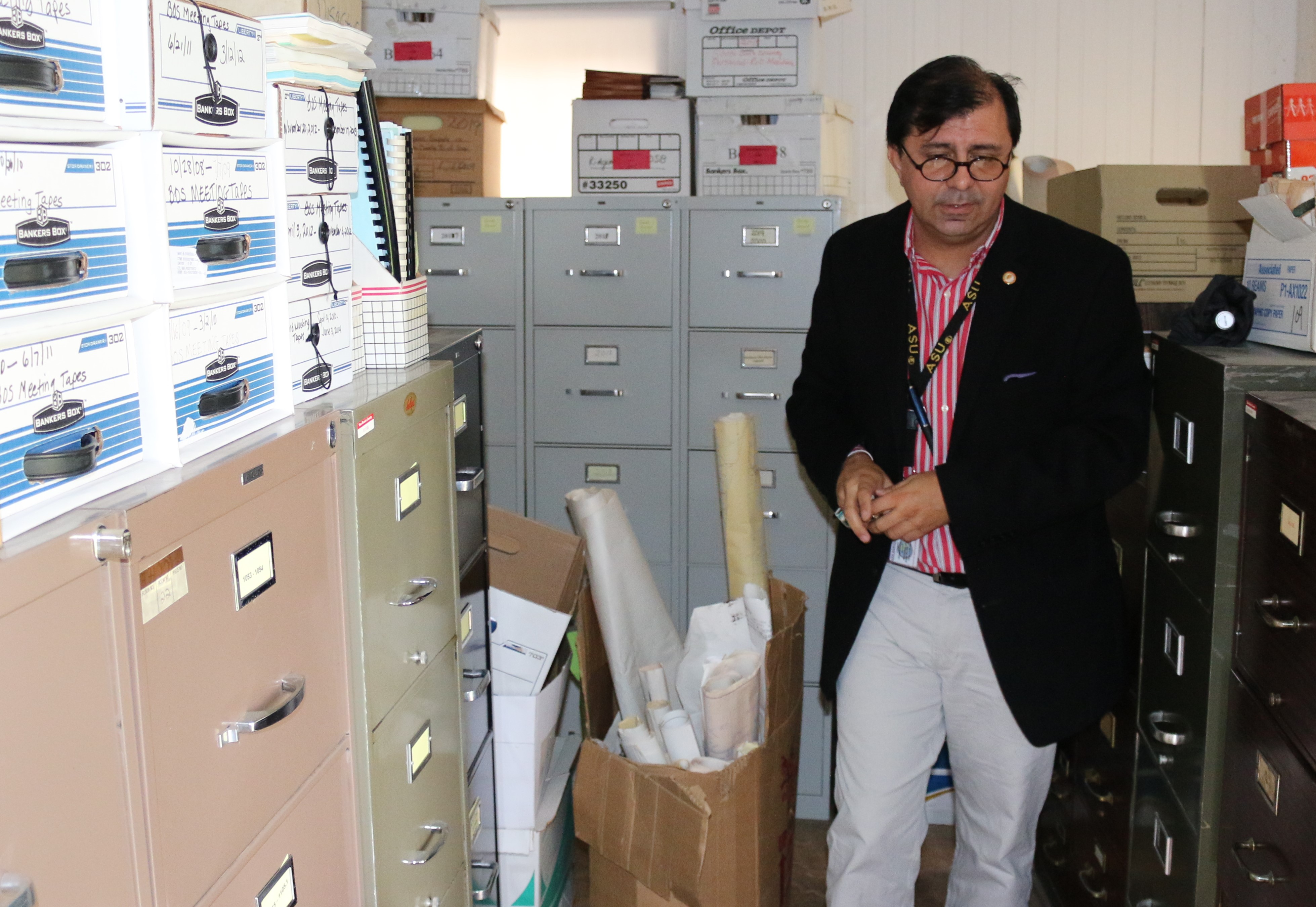
There have been attempts by past clerks of the boards to organize and categorize files, but these found their way into boxes, books and cabinets that have been relegated to dark, dank buildings and storage facilities, forgotten, for the most part, by everyone. Think the final scene in that “Indiana Jones” movie of the warehouse full of boxes and you have an inkling of the task at hand.
Presently, though, if a person were to come in and request a record going back to the 1960s, Valdez said it would exist somewhere, but he just isn’t sure where. The idea, he said, is to get as much as possible online as fast as possible. To hire a company would cost hundreds of thousands of dollars. To have staff comprised of himself and one other person, interns or volunteers do it could still take years.
“The law requires the county to have a record of retention schedule,” he said. “We don’t have a record of retention schedule for the Clerk of the Board’s office. Other departments may have their schedules, but none of that is pulled together at this time.”
A record of retention schedule is an official statement of how long various types of records are required to be archived. Minutes, agendas and resolutions are permanent documents. But it’s a grey area concerning general plans, financial reports, contracts, and budgets. Valdez said there is no unified instruction that covers all these types of documents.
“Part of this project is to come up with a document retention schedule,” he said. “Previous clerks of the board have tried to do this, but previous boards, for whatever reason, may not have passed it. We’re going to put that before the board in the next few months. Without it we won’t have guidance as we put more into the system to tell us how long we will keep individual documents and how we will archive it.”
Some documents are so old or obscure there may not be a legal requirement to keep them, but Valdez said from a historical or heritage point of view, he wants to save as many as possible.
“They speak to the history of the community and they represent a very important piece of the state’s history,” he said. “A lot of that stuff is over at the recorder’s office, but we still need to have it available in an accessible way. Our efforts here are to get as much of that available online.”
You must be logged in to post a comment.