

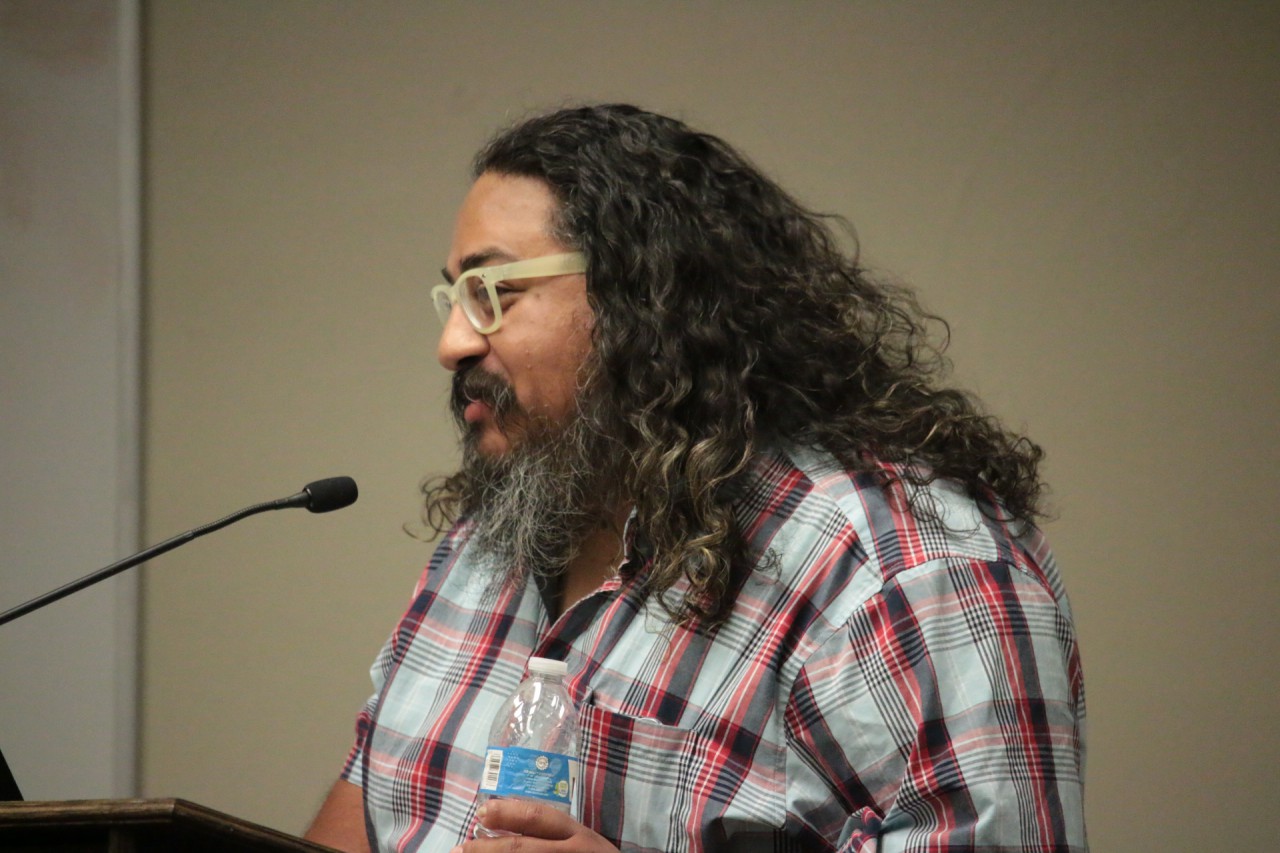

When Rolan Resendiz, an organizer for public art projects and cultural events, got up to speak during the public comments portion of the June 20 Hollister City Council meeting, he was firing a verbal shot across the council’s bow in an effort to stop the sale of the 400 Block to Del Curto Brothers Group and the Community Foundation for the development of condominiums and a philanthropic center. What he was asking the council to consider was an advisory vote be put on the November ballot.
“I believe an advisory vote on whether the 400 Block should stay as an open space for a public plaza or develop it into residential and commercial buildings would help you make a more informed decision about the future of our downtown,” he said. “I believe a majority of the citizens of our community want to see the 400 Block remain as an open space for the people. The citizens have been very vocal about not wanting any condos or empty retail space at that location.”
Resendiz said that if the council placed the decision on the ballot, it would save the city from having to go through a costly special election, and it would also allow for the public’s voice to be officially heard on the issue.
“Please itemize this issue on the agenda for the next city council meeting so that it can be placed on the November ballot,” he concluded.
Mayor Ignacio Velazquez thanked Resendiz and because the issue was not an agendized item, neither the mayor, having repeatedly voiced his disapproval of the project online and in print, nor the rest of the council could comment or take any action on Resendez’ remarks. While this is true, on some occasions when a public comment strikes a particular council member’s sensitivity meter, recommendations can be made to the city manager to add an agenda item to a future meeting.
That did not happen during the meeting in this case.
When the city council voted 4-0—with Velazquez recusing himself because he owns The Vault, which is adjacent to the 400 Block—in favor of selling it to Del Curto Brothers Group, public furor was instantaneous as the “What’s Happening in Hollister” and “Save Our 400 Block” pages on Facebook erupted with negative, and often inflammatory accusations, ranging from accusing the council of gross incompetence to outright fraud.
Velazquez participated in and encouraged the onslaught with posts going up on Save Our 400 Block challenging his fellow council members and backing a move to add a referendum to the November ballot to stop the development project.
As recently as June 11, he posted: “Many people have tried to silence me on the 400 Block issue including my fellow council members. As an individual I have a right as do all of you to speak out to try to save the 400 Block from becoming condos. If you haven’t had a chance to fill out the Save The 400 Block form yet please fill out the form at this link: https://docs.google.com/forms/d/1xYT_CwkPe-KqxyvyIsCpyGhbQFsuMyk5aLvjF8Wxe7o/viewform?c=0&w=1 so we can send you information about the petition drive that we are about to launch.”
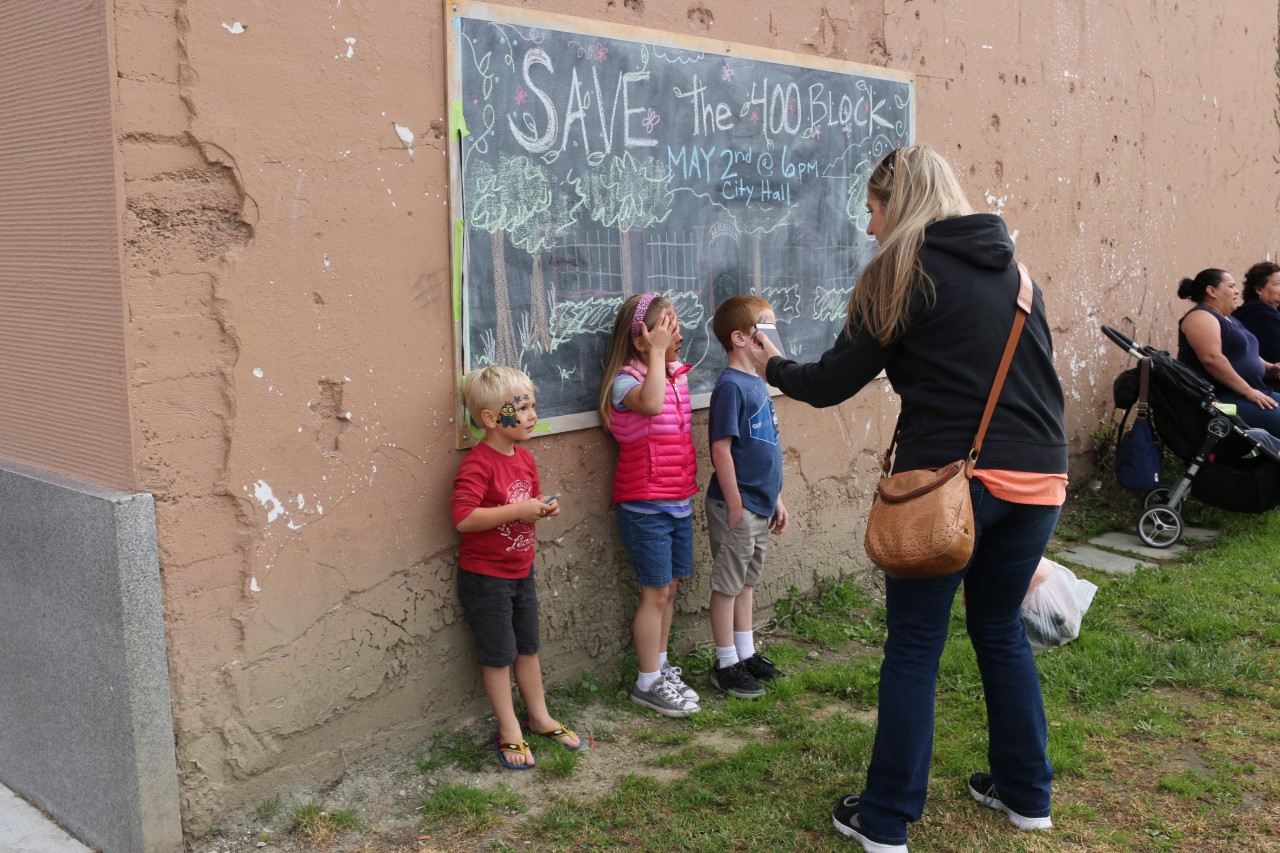
He continues to rally for support against the project, inviting citizens to come to the 400 Block to take pictures of their families there. He has done so with his own son.
As for the four other members of the council, they have, for the most part, remained silent, at least publicly. Councilman Victor Gomez did push back briefly on Facebook, but he has not commented further for quite some time.
At face value, there seems to be two points of view, perhaps more. There is a very vocal segment of the community that wants to keep the block an open, green space where they can hold public events featuring art, music, rallies and other social gatherings. Then there is the business community and a majority of city government that believes the development will rejuvenate downtown with new taxes and residents in the condos who will hopefully shop downtown and walk the streets.
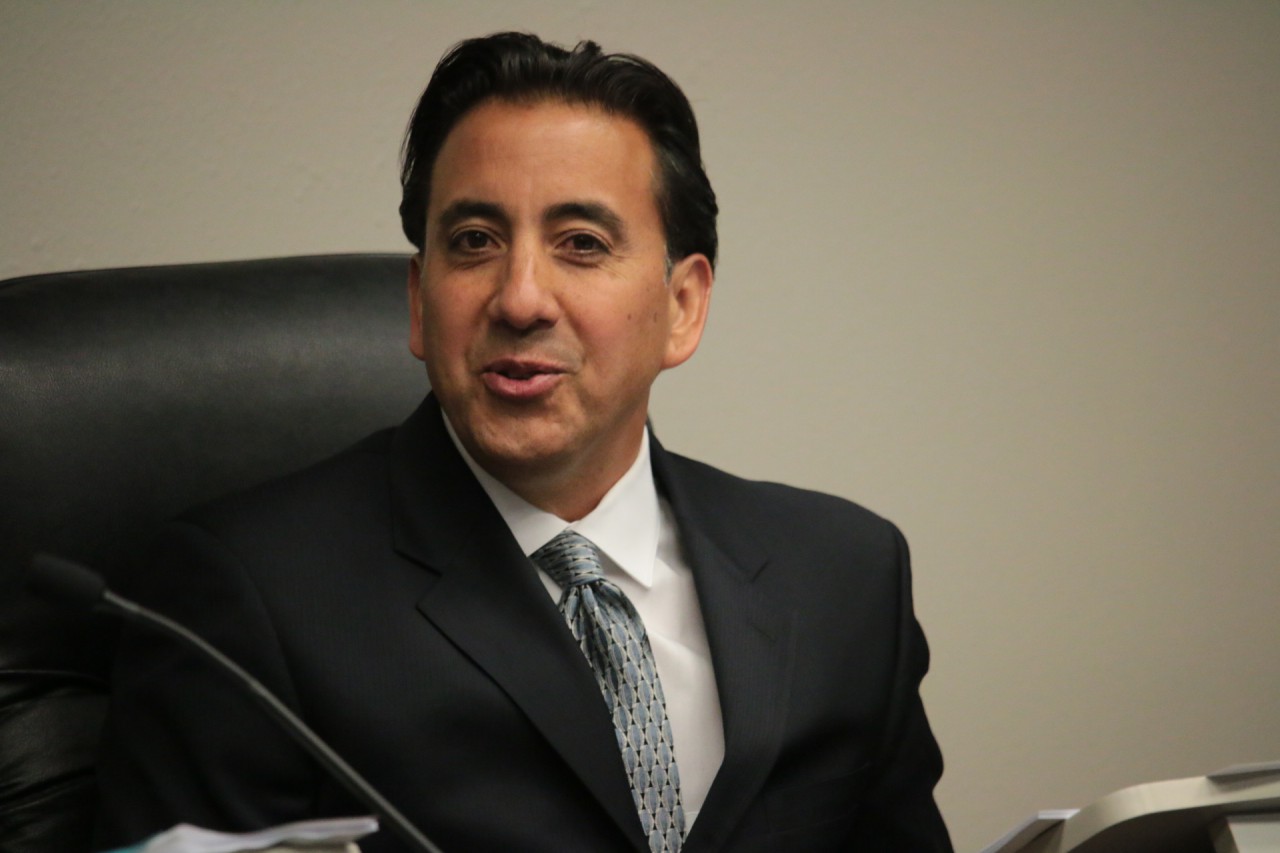
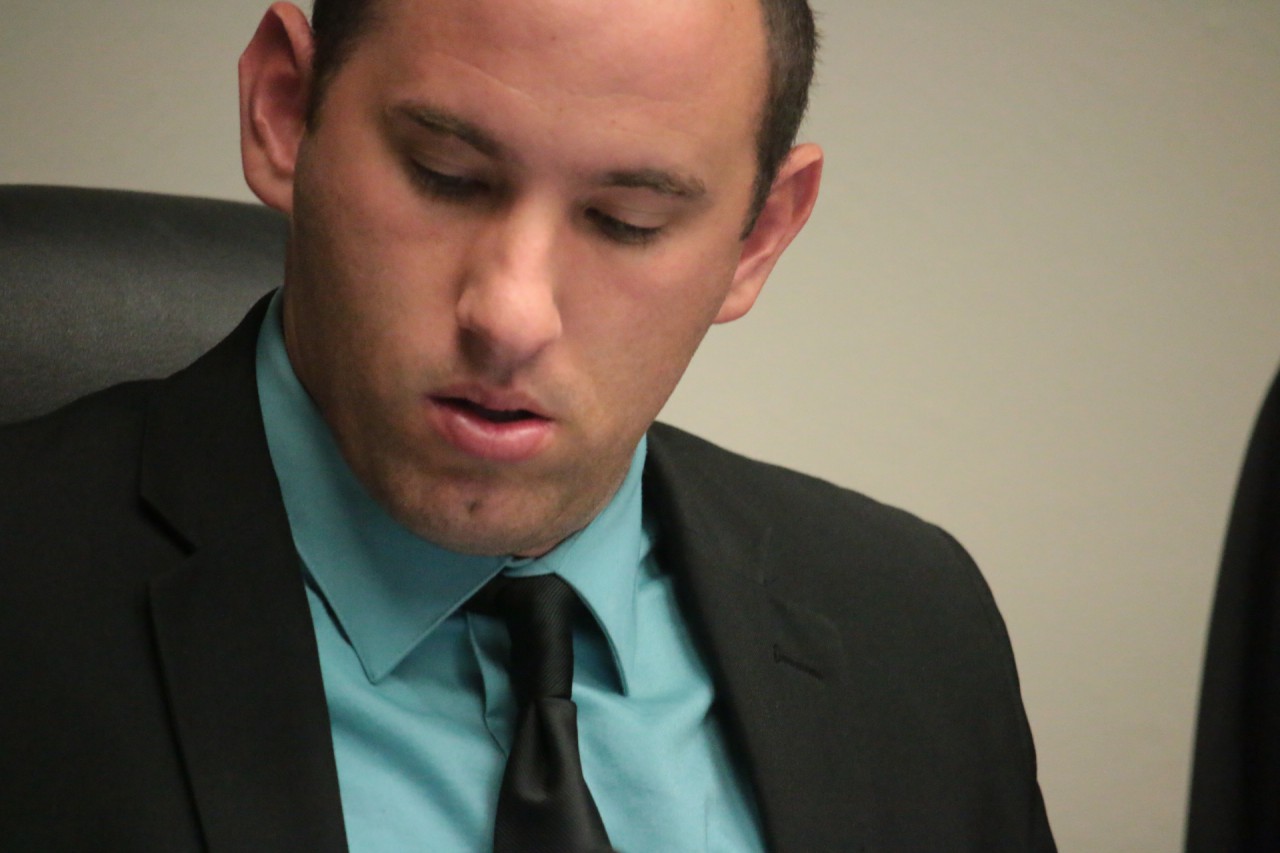
While council members Karson Klauer and Mickie Luna voted in favor of the 400 Block development plan, their comments revealed two very different recollections of the block. Klauer said he couldn’t remember it not being a grass-covered square where folks gathered for festivals and other activities. Luna said she remembered distinctly the 20 businesses that thrived on the block before the 1989 Loma Prieta earthquake that destroyed or badly damaged them to the extent that they had to be torn down.
Just before the 6.9 magnitude (with a surface wave magnitude of 7.1) earthquake, with the epicenter being at the Loma Prieta Peak in the Santa Cruz Mountains, struck at 5:04 p.m., on Oct. 17, 1989, the following businesses were still open along San Benito Street: IOOF Building (rebuilt), Rovella’s Gym (relocated), Caputo Printing (relocated), Poletti (rebuilt), Judy’s Fabrics (relocated) Balz Photography (relocated), New China Café (closed), Bill’s Bull Pen (relocated) Sunrise Plaza (closed), Maddux Jewelers (relocated), Mauro’s Stationary (relocated), Las Palmas Restaurant (rehabilitated), Mode O Day (rehabilitated), Dick Bruhn’s (rebuilt), Hollister Travel (relocated), Garcia Jewelry (relocated), Ford’s Department (relocated), Showcase Theater (closed), Gunnels (closed), and Cannery Warehouse (rebuilt).
Ever since the building on the 400 Block was damaged and had to be torn down, the plan was to build it back, not leave it a vacant lot.
Just a few months later, the Downtown Strategy and Plan identified the two vacant lots on the 400 Block as an opportunity to assemble property and facilitate the building of a large development with a multi-use building (retail, cinema and housing).
The 1991 plan was multi-facetted. First of all, the goal was to create a vibrant downtown core. Planners wanted to locate exactly where the earthquake fault was and then reconstruct the damaged buildings. It was important to redevelop those buildings damaged by the quake or fire and strengthen or rehabilitate landmark buildings, officials said. There was also a need for more parking. After the buildings were once again housing businesses, there needed to be a concentrated effort to encourage people to come downtown at night and to provide opportunities for in-town housing. The entrance to downtown needed to be enhanced, as well as assure a mix retail and housing along San Benito Street.
The now defunct Redevelopment Agency (RDA) purchased the 400 Block properties between 1994 and 1995 and announced its long-range property management plan. Over the next 18 years RDA, and then the city always had plans to develop the 400 Block.
The first project was to negotiate with the Mauro family to build a movie theater, which evolved into a project with Barry Swenson Builder to construct a two-story building with a theater, restaurant, retail and office space. In 1998 there was an attempt to negotiate with Lexmar Development Company LLC which wanted to build a hotel. By 2000, the hotel was out and a Center for the Arts of San Benito County Performing Arts Center was in. Then the sewer moratorium hit in 2002 and all building plans stopped for the next eight years, closely followed by the recession from 2009 to 2011, when Gov. Jerry Brown introduced and secured legislation to eliminate redevelopment agencies, which prevented them from entering into any type of agreements. Between 2012 and January 2015, the 400 Block was transferred from the RDA to the city, with the stipulation that it “hold the property for redevelopment.”
Between the various projects over the years, it was hoped that there would be an increase in parking spaces to alleviate congestion downtown. There were two separate plans between 1999-2004 and 2005-2009 to develop 40,000 square feet of commercial space, as well as a 30,000-square-foot project from 2009 to 2014. All were to attract more downtown shopping.
Along the way, city councils passed two resolutions. The first, Resolution 2001-76, passed Sept. 17, 2001, allowed the use of the 400 Block for nonprofits. The second, Resolution 2010-24, passed March 15, 2010, was an update to the policy for the use by nonprofits.
As the successor to RDA, the city was obligated to use a disposition and development agreement or development agreement as a tool to assure that the 400 Block be developed as a keystone property to support economic prosperity of downtown. In this regard, the city issued a request of qualifications to enter into a development agreement for a 30,000- to 40,000-square-foot, mixed-use building or an all commercial building designed to conform to the Section 7 Design guidelines in the 2008 Hollister Downtown Strategy Plan. The agreement also stipulated that the proceeds from the sale would be distributed to taxing entities pursuant to the Health and Safety Code or to pay enforceable obligations.
An added twist to the whole arrangement was the fact that the Department of Finance required the city of Hollister to enter into an agreement with San Benito County, Gavilan Community College, Hazel Hawkins Hospital District, Hollister School District, and San Benito County Office of Education to hold the 400 Block for redevelopment for what was called a “catalyst project.”
Also, those taxing agencies agreed to not require the city to pay equivalent property taxes while the city tried to nail down a deal with a developer. Ultimately, the city would receive 11 percent of the sale, with the remainder being divided among the taxing agencies.
When the sale amounting to $390,000 to Del Curto Brothers Group did take place and was approved—despite rigorous opposition—at the May 2, 2016 council meeting, this division of the financial pie among taxing entities with the city only receiving 11 percent, was loudly touted as yet another example of incompetency or even perhaps collusion on the part of the council, sans the mayor, who made it clear from the get-go that he opposed the sale.
There hasn’t been any scientific polling to determine which side has the majority in the 400 Block development debate. But the battle lines have been firmly drawn, with four council members (Karson Klauer, Victor Gomez, Raymond Friend and Mickie Luna) and their supporters—who have remained publicly silent, for the most part—on one side, and the mayor and a vocal citizenry on the other.
Klauer did, however, answer an query from Cassondra Sanchez, who asked him to put the issue on the November ballot. Klauer answered: “I appreciate your zeal in regards to this topic. I have provided my criteria for my decision and I stand by it. I completely understand that people disagree with my position on this item. I don’t plan on taking steps to put this item on the November ballot. I will not work to undermine the decisions of the council, whether I am in the majority or not.”
Rolan Resendiz’ heralding call for an advisory vote is picking up some steam on the “Saving Hollisters 400 Block” Facebook page. On June, 21 Robin Pollard, who began a community garden with her husband, posted: “The city PRC (Parks and Recreation Commission) is beginning the long process to update the Park Facility Master Plan, written in January 2001. Once the 400 block is safe from condos, this plan will become the best, fastest path to transformation of the block. From grass only to a true public plaza. I’ll post events to strengthen this plan as they arise. Thanks to all who have sparked an interest in creating open space in our downtown, keep fanning the flames of community involvement.”
Over on the “Save Our 400 Block” page, the mayor has stayed steadfast in his opposition and has posted a link to a petition, https://goo.gl/iC96vu, staying out of the fray at meetings but remaining heavily involved in the issue on social media.
You must be logged in to post a comment.