



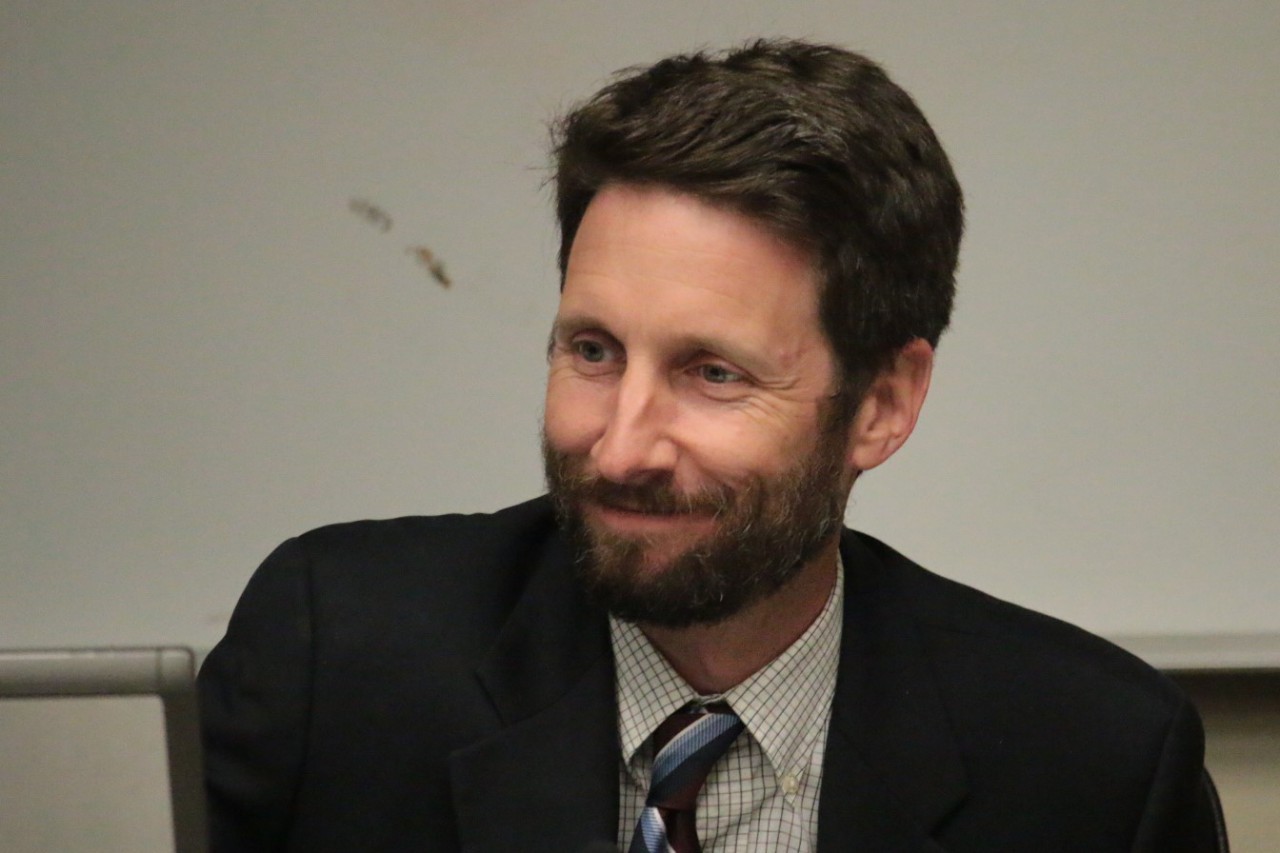
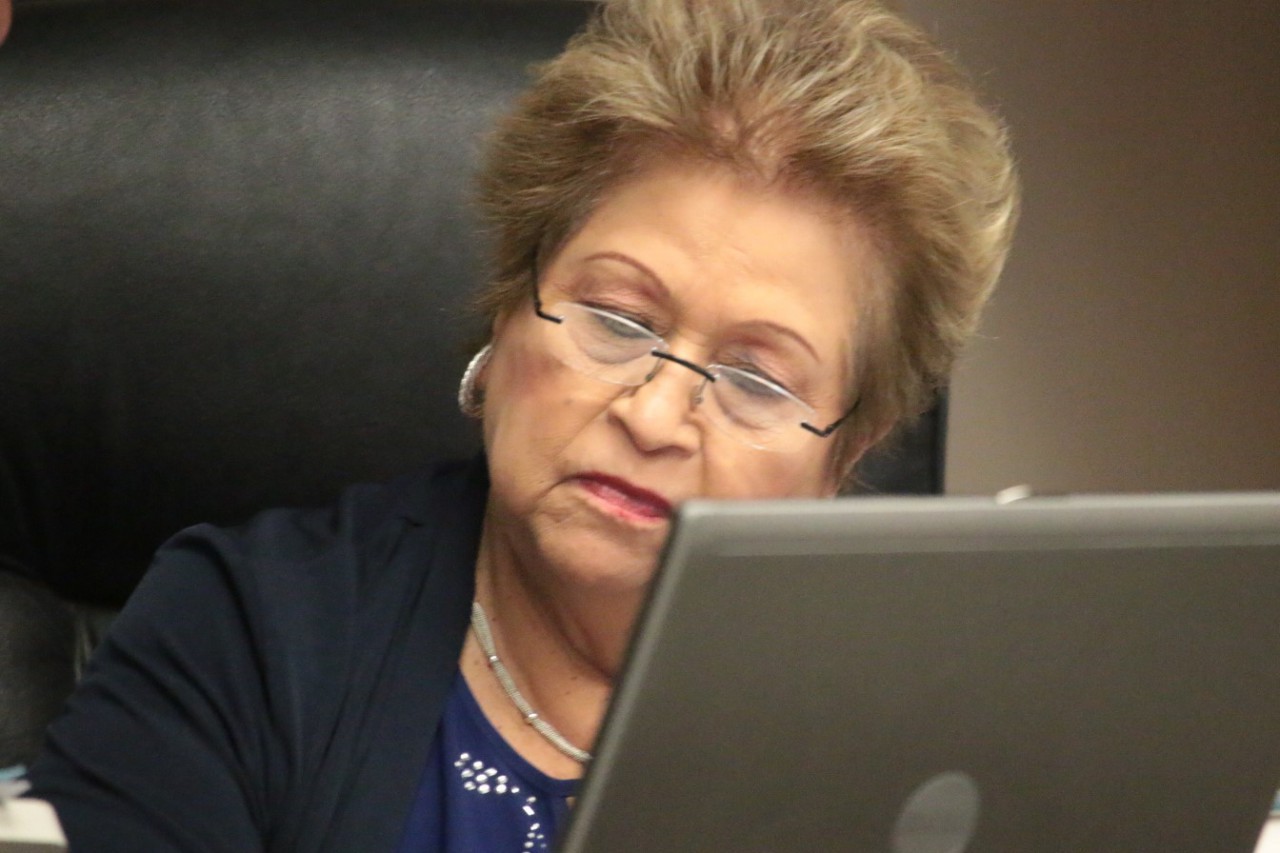

The last agenda item the Hollister City Council considered at its June 20 meeting was a mixed bag of consequences and possible conflicts of interest that even City Attorney Paul Rovella wasn’t quite sure how it would play out. What was at stake was the term length for the mayor’s office.
Voters had previously decided the mayor should only hold the office for a two-year term. Mayor Ignacio Velazquez, who is well into his second term, had asked Thomas Graves, city clerk, to present for discussion the possibility of adding to November’s primary election ballot a change that would extend the office term to four years.
“If you decide to put it on the ballot we would suggest that the starting term begin Jan. 1, 2019 (later Councilman Victor Gomez corrected him, changing the date to Nov. 8, 2016), to avoid the appearance of a conflict (of interest),” Graves told the council.
Gomez said his main concern was the year and the possibility that anyone running for mayor this year could only serve two years, in which case he couldn’t support the measure.
“We’re going to get a significant amount of voters coming out (because of a presidential election) and I think that’s the best opportunity for our voting population to make their voices heard, so I can’t support it being implemented in 2018,” he said, “and I can’t support it if it were implemented in 2016.”
Graves told Gomez, as he glanced over to the city attorney, mentioning his name for some sort of guidance, that he did not think anyone could be elected to a term of office that is subject to change.
“In 2012, when voters voted on the mayor they also voted on if it would be a two- or four-year term,” Rovella said.
“But it was a whole new thing,” Graves interjected. “They were voting on a mayor citywide and they were also voting on the term of office. What we’re doing now is only changing the term and electing the mayor at the same time. Is it any different?”
Graves said he thought the idea was not to confuse voters because a presidential ballot would include a a great number of items on which to vote.
“If the election code will allow us to do it, I’m fine doing it, I just need to talk to our election attorney,” he said.
Councilwoman Mickie Luna commented that the voters may be confused.
“It was confusing at the beginning when we went from an appointed mayor to an elected mayor,” she said. “I received a lot of phone calls wondering if there was a term limit. It was passed with the mayor serving a two-year term. It did not estimate how many years a mayor could serve. At this point, I cannot agree with this either. I think we have a very important item on the ballot (she didn’t say what) and we need to just move on that, and, hopefully, the voters read that carefully and (understand) the impact it will have on this city.”
Councilman Karson Klauer wondered how close the vote was in determining the two-year term limit. He said he favored the term limit extension and putting it on the upcoming consolidated presidential election ballot, and that the four-year term actually take effect Nov. 6, 2018.
“But it seems to me that the electorate already voted on this four years ago,” he said. “From a practical perspective, I think it would help if we had a four-year term mayor and it would be easier, as a council, to interact.”
City Manager Bill Avera said he agreed with Klauer.
“I don’t think it’s necessarily unfair to have a mayor serve shorter terms than a council person,” he said. “Going through the process of potentially having three candidates on a five-person council every two years where you can have wholesale changes in the direction of the city, that’s not necessarily healthy for the city. Not that it would ever happen, but it doesn’t take much at your level to start changing policy. A total change of policy every two years can be detrimental.”
Klauer said he believed it would be a disincentive for most people to run for mayor when the term is only two years, even though they get the same vote as a council person, who is running for four years.
After his comment, there was a long pause, as if everyone seemed to be waiting for someone else to speak up. Finally, Klauer threw the ball into Mayor Velazquez’s side of the court by saying, “Mr. Mayor?”
Velazquez said, somewhat hesitantly, “A lot of things need to be thought through because it’s difficult every two years. I’m fine doing it, but it creates a potential problem. It creates the issue of not knowing where we’re going to be in two years and trying to follow through with projects we’re all working on. A lot of these things take time. One of the best examples is the budget. Three years ago we were scratching to survive and tonight we had a report on where we’re at. That’s still a 10-year project. It takes a lot of work as a team.”
He said it should be up to the voters if they want to stay with two years or extend the mayoral term to four years.
“At the time this was put out a lot of people were confused on the matter,” he said. “Most people thought the mayor was elected. I think Councilman Gomez is correct. This is a presidential year and it’s when you can get the most voters coming out to voice their opinions. This would be the time to do it (add measure to ballot).”
Klauer wondered that if the council vote would determine whether the next mayor serves four years, should Velazquez vote on it. He said he didn’t know if it mattered, but wondered that the question might come up. He also applied the same question to the other council members in case any of them, including himself, were to decide to run for mayor. Rovella pointed out that the council would not be voting on the term limit, only that they would be voting to place the measure on the ballot proposing the four-year term, and the voters would be the ones actually voting if the term limit should be changed.
“I don’t think that’s a conflict of interest,” he said, “because you’re not participating in the final decision if the term’s going to be changed. But perception of a conflict is often more powerful than the conflict itself. If there is a concern about it, we could have the mayor recuse himself. But, at this point, he’s voting on putting an item on the ballot for the voters to determine.”
Klauer agreed with Rovella’s reasoning and said he didn’t think anyone should have to recuse themselves. Avera added that, technically, all five members of the council could be running for mayor.
Gomez said that four years ago he publicly stated that he favored a four-year term for the mayor. He said that for some reason, in the second year of a two-year term when the person is running for office again decisions are sometimes made that they might not have made but for the fact they were running for re-election.
“That’s a concern of mine, and if we could make that change I would support the measure (with the new date of Nov. 8, 2016), if that’s the desire of the council,” he said, and then quipped, “if not, I can wait another four years.”
At the end of the discussion, Council member Klauer and Mayor Velazquez supported the item, with Council member Luna voting against it. Council member Gomez was initially leaning toward the change, but only if the change could take effect on the second Monday in December of 2016.
“That is not possible,” Tom Graves, city clerk clarified later, “since a candidate may not run for a term of office that is not yet in place. It would be possible to change the term of office from two to four years with an effective date of December 10, 2018, but the City Council would have to affirm that at its August 1, 2016 meeting, and the voters would have to approve it in the upcoming general election this November.”
So, as it stands now, the vote was two in favor, Velazquez and Klauer, and two against, Luna ang Gomez., with Councilman Raymond Friend being abscent.
You must be logged in to post a comment.