

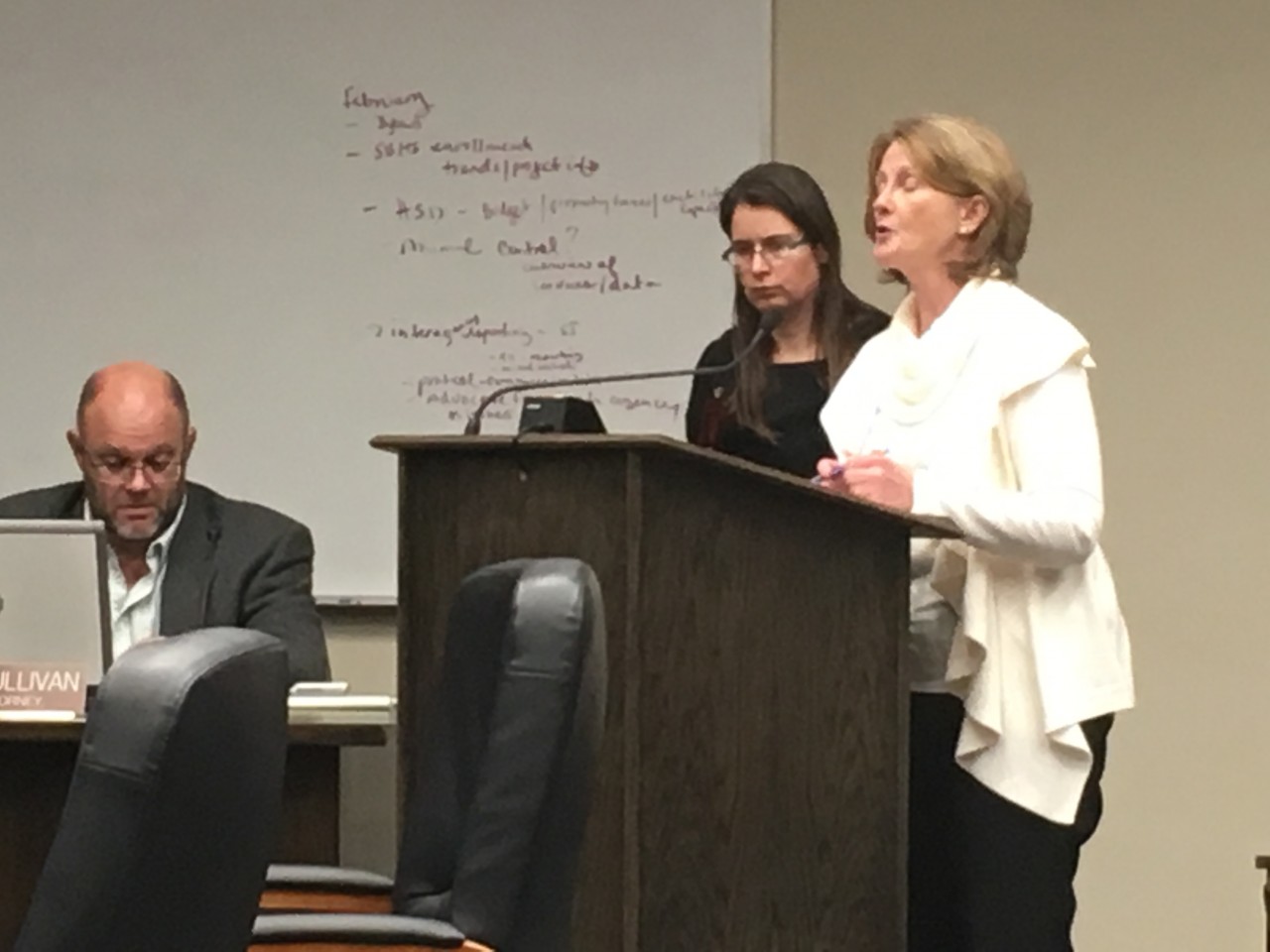

Considering those who may not like decisions on energy choice made for them without their input, the Hollister City Council delayed considering a resolution until February. Mayor Ignacio Velazquez and Councilwoman Mickie Luna, in particular, wanted to give Hollister residents an opportunity to learn more about the Community Choice Energy Program. If the city were to sign on to the program, residents might not know that they would be automatically enrolled, and would have to opt out, rather than opt in. This was just one sticking point that Velazquez had with the program.
At its Jan. 9 meeting, the council was briefed on the program. City Manager Bill Avera reminded the council that in Dec. 2013, it passed a resolution that confirmed that the city would participate in a feasibility study of the Monterey Bay Community Choice energy project. He said he decided to add the agenda item concerning the program as a study session and to provide the opportunity for public testimony. He went on to explain what the program entails.
“It offers the ability for people to choose the methodology of where their power comes from,” Avera said. “There are 21 potential participating agencies in the Monterey Bay area. Nineteen have passed resolutions that you will be seeing at the Jan. 17 (later changed to Feb. 6) meeting for adoption. Hollister and Sand City are the two remaining communities that haven’t adopted it. San Benito County recently did so in early December.”
Avera further explained that if individuals or businesses wanted to utilize green energy sources they would participate in the program. He said PG&E would continue to provide the transmission and billing functions. He said several hundred thousand dollars had been spent to set the program in motion and an additional $3 million would be needed for start-up costs, with an annual cost of $10 million. The city’s share, he estimated, would be about $50,000, and would be arranged through a “financing mechanism” rather than an outlay of cash. He also explained that there would be an 11-member board, and that San Benito County, as well as Monterey and Santa Cruz counties, have permanent seats. Communities with populations over 50,000 would also have seats, which some smaller communities have complained about.
Velazquez said the big problem that he has had all along about the program is the “opt out” choice.
“If this was a situation where a customer could opt in, I wouldn’t have an issue with it,” he said. “I have a problem forcing people to do something, and then they say they want out. There are a lot of ways to provide power. I’m in this business (solar) myself. I don’t want to be in a situation telling somebody what they have to do. I want to be in a situation where I’m allowing them to decide what they want to do. If we chose to do this, everybody would be in, and then they’d have to opt out.”
The mayor said residents wouldn’t know what they were getting into and they wouldn’t know what the prices were.
“The solar industry is changing quickly and a lot of these solar farms don’t even pay property taxes on their equipment,” he continued. “That’s always bothered me. It’s a utility, it’s an energy factory and I think they should be paying those property taxes to those communities.”
Velazquez asked Councilman Raymond Friend if he wanted to comment. Friend said he wanted those present to hear the presentation before he did so because he felt his opinions might differ considerably.
Virginia Johnson, manager of the project, said more than $400,000 had been raised over the past four years for the technical study. She said Santa Cruz County funded the 300-page analysis and sample legal documents based on best practices from other community choice energy agencies. As part of her presentation, Johnson showed a four-minute video that claimed the project would provide a community with the opportunity to change the world by empowering it to decide where it gets its energy, reduce greenhouse gas emissions, and provide many skilled, permanent jobs — all without new taxes or costs to local governments.
Johnson’s co-team member, Brennan Jensen, re-emphasized that the project had the potential to create local jobs, stimulate the economy, and allow consumers to choose their sources of energy.
“Choice is at the center of this and all users have the opportunity to opt out,” she said. “There will be tremendous opportunities with the revenues that get to stay local to be reinvested in the community in line with our local values.”
Jensen explained that at the state level, it’s difficult to influence the process, but local JPAs (joint powers agencies) enable cities and counties to have more leeway in making those determinations. She said communities would then be able to fund local solar projects that would help generate even more power that would help reduce greenhouse gas and transmission distances.
“Those are some of the ways we can actually create resiliency at the local level and support long-term economic development,” she said.
Councilman Karson Klauer asked Jensen if there would be in guarantee of rate parity, or equivalency.
“The short answer is ‘no,’” she responded. “However, the marketplace is currently very favorable for renewables and the prices have gone way down. We will have a local governing board that will be able to control rates and citizens will be able to say ‘we would like to use those surplus revenues to either lower or stabilize rates.’ Our opportunity to stabilize rates long-term is much more profound as a local JPA.”
Klauer said his fear was that once everyone in Hollister was automatically opted in, the market could experience a downturn.
“Then people start opting out to go back to PG&E so they don’t have to pay an extra 10 percent, then the JPA is on a cliff for this big bond and there’s fewer people to pay for it,” he said.
Jensen seemed confident that there would be little risk because of the depth of the study that was conducted and that there would be a strong due-diligence requirement before any bond is considered.
“We’re not going to be walking into this blindly and taking those kinds of risks without a thorough analysis,” she said.
Friend finally said, “I can’t hold it back any longer,” and then went on to say that even though he had no problem with renewable energy, he wanted everyone to understand that he does not like the fact that Sonoma County was being used as the guidepost for renewable energy.
“The state gave Sonoma County 18 geothermal units and said ‘here, create your own little utility company,’” he said. “They don’t pay for that power that comes out of those geysers. This here does not have any power plants. Everything that this group supplies to residents they’re following the spot market every day to get it. If it’s solar and it’s lower, they’re making money at that point. If the solar units are down for maintenance, you’re buying it from Utah, and it’s coming from coal. It all goes into a grid.”
Friend was doubtful that if PG&E continued to provide the power and handle the administration and billing that there were few, if any, real local jobs on the horizon.
“To think that this group can get together and in a few years have their own solar program is just pie in the sky,” he said. “If you look at what just happened in this county south of here (Panoche Valley Solar Project), where they tried to build a solar plant that started off at 2,700 megawatts, and by the time the environmentalists were done, it was down to about 700 megawatts. That was being built by a contractor who was backed by Southern Cal Edison. I would think they probably have more pull than a little three-county operation.”
Friend cautioned against signing on too early because of the uncertainty of the solar industry. He said the reason others want San Benito County involved is because it has the only open land left in the area where large-scale solar farms could be built.
“To provide the energy for everybody in these three counties, the whole east side of the San Luis Mountains are going to be covered with solar panels,” he warned. “We’re talking about thousands of them. Yes, that will create jobs because there’s going to be a couple contractors doing that work and they might hire some local people, but we’re not talking about a lot of jobs.”
Friend went on to explain how pricing works, explaining that by the time the electricity gets to a person’s home. any profit is minimal. He wondered aloud where the profit would go.
“Is it going to the people who are paying the bill?” he said. “No. They’re going to try and build these projects and it will take 20 years. There’s never going to be a very big profit margin. They’re not going to make a lot of money on this.”
Friend said that if the main incentive for rate-payers is green energy, and they are willing to pay more for it, then that’s fine. He said they have to realize, though, that nothing is free; there won’t be much profit or jobs.
“Twenty years down the road, if we have all our generators, there might be a profit,” he said. “I just can’t see the benefit now.”
Klauer said he was concerned about handing over the power supply to a JPA and asked if there was any mechanism to control rising rates. Jensen said the local boards, with input from the public, can make those kinds of decisions, whereas when dealing with PG&E or other utilities, there isn’t that flexibility.
“I can’t imagine the JPA board making a draconian decision in absence of public input,” she said. “Moreover, why would you want to de-stabilize a stable organization?”
Velazquez asked if it were true that PG&E already has a program that gives consumers a choice to buy renewables. Jensen said it does, for a cost. Velazquez asked why the program’s portfolio is only 62 percent clean energy, rather than 100 percent.
“If we’re going out to the public and saying we’re trying to create clean, green energy, but the current level is only 62 percent,” he said, “that doesn’t make sense.”
Councilman Roy Sims wondered if the JPA fails would there be any sort of protection for the consumers. Jensen said the “default provider” is PG&E. After the council questioned Johnson and Jensen for more than an hour, 12 residents presented their views on green energy and favored moving forward with the resolution.
Klauer was curious about the opt-out schedule. He was told customers can opt out one time annually, or more if the board should determine it wants more opportunities to do so. Friend brought up the point that because Hollister had a population of fewer than 50,000, it had to share a seat on the board with San Juan Bautista.
“I really have a problem with us being underrepresented,” he said. “We only get one seat. Why does Watsonville get two seats? Salinas has three seats. They’re going to out-vote anything that comes from one-seat Hollister.”
Velazquez had the final say, stating that he would be more in favor of the project if were 100 percent green energy.
“Either you’re in to make it better or you’re not,” he said. “I’m having a hard time why we’re going in a different direction with just a percentage. That’s just another utility company competing on the market. And I have a concern with the idea that we can somehow educate the public. I’d rather have that input beforehand so we understand it. I think a lot of times, people don’t realize what they’re in and later they’re very upset about it. If we knew you could exit quarterly, that might help a bit. As it is not defined yet, it makes it hard for me to make a decision without that information.”
He agreed with Friend about the city being underrepresented.
“We are the second largest city in the area,” he said. “And yet we’re out-voted by the coastal cities that come together. It’s important for us to have a little more representation at the table.”
For more information on Peninsula Clean Energy, click here, or visit the Lean Energy website here.
You must be logged in to post a comment.