




The Hollister City Council recently received a report from Mary Paxton asking council members to interpret the vendor fees for events such as the downtown farmers’ market, one-day sales, auto sales, and the motorcycle rally, after which the development services department would return with a resolution to clarify those fees in the Hollister Municipal Code for temporary or seasonal sales.
Paxton went over a litany of fees the city charges. First, she recommended the council consider that vendors who participate in more than one type of event, but are selling the same product or service, be charged $30 annually, rather than separate fees for each event.
She went on to describe how vendors are classified and the fees they are charged. Vendors known as itinerant merchants, such as those who sell Christmas trees in a fixed location, are being charged a license fee of $225 annually. There are also “peddlers,” such as ice cream trucks, and “solicitors,” who do door-to-door sales or take orders by phone. Paxton said city staff recommended that vendors at the motorcycle rally be classified as itinerant merchants and charged $225. Promoters of events, such as concerts, are charged a $750 annual fee.
Mayor Ignacio Velazquez asked Paxton if the promoter fee covered vendors within a premises or fenced-in area. She responded that the staff was recommending the fee “act as an umbrella” for the entire event.
“An example might be the Olive Festival where they would apply for a business license for an amusement of a periodic nature because it’s a festival,” Paxton said. “They would pay the business license fee and then collect from the vendors fees to set up booths within the event area.”
Another option for the Olive Festival, she said, would be to not charge the event itself because it’s a nonprofit, but charge each individual vendor $30. In addition to this fee, she said, the state adds another dollar for the Americans with Disability Act (ADA). When she said some contractors can opt to pay fees quarterly instead of the full fee, Velazquez wondered if that could be changed.
“Everywhere I go to get a license in any city I’m paying $200 or $300,” Velazquez said. “That’s something to be thinking about.”
Councilman Raymond Friend ask Paxton if the report represented the existing code. She said it did and that what she was doing before them was asking for them to interpret the code so the staff could come back with the resolution to “memorialize” it and “make it clear.”
“There’s been some variable practices in the past and we’d just like to clarify the interpretation with the resolution,” she said.
Friend questioned the $750 fee and whether it covered an event of any duration — from one day to three days — and that there is nothing in the code concerning nonprofits to exclude them from paying that fee. Paxton pointed out that if the city sponsored an event, such as the Olive Festival, then it and all the vendors could be exempted from having to pay any fees.
“I don’t want to go that far,” Friend said.
Brent Miller, administrative director and assistant city manager, said the city had the option to charge an administrative fee of $30 per vendor. Friend said even if the city did charge that fee it would not solve the problem that it could be too expensive to put on the festival. He was thinking that in addition to charging each vendor $30, the nonprofit would also pay $750. The mayor said that was not the case, but that the nonprofit could pay the fee, then recoup the cost by charging each vendor whatever it wanted; or the vendors could pay their portion of the overall fee upfront to the nonprofit, which would then pay the total fee to the city.
“I think we should make a distinction,” Friend said. “If you have the Honda dealer from Morgan Hill come here for a one-day sale, that’s one thing. But if you have a nonprofit put on a festival for one day, there should be a distinction.”
Paxton reminded Friend that nonprofits are already exempt from business license fees, and any additional nonprofits taking part in a festival sponsored by a nonprofit would also be exempt. Miller clarified that while the nonprofit is exempt; each vendor within the event is not. Friend felt the city was “changing in mid-stream,” saying that if a for-profit organization paid the fee, the vendors should fall under its umbrella and not have to also pay fees, but if the nonprofit is exempt, then the vendors should be able to work under its umbrella, too.
“If we’re going to make them (nonprofits) exempt, then their activity should also be exempt,” he said.
Paxton asked Friend if he was saying that for-profit businesses taking part in a nonprofit’s event should not have to pay a license fee. Friend implied that the fees could be dissuading businesses from coming to town.
“We don’t want to price ourselves out of the market,” he said.
Councilman Karson Klauer brought up what he called a semantic point: “Just so we’re all on the same page, this is a ‘business license tax.’ As a business, you don’t receive anything for the license, so it’s a tax. If we’re going to call it a ‘fee,’ then I know people who are going to assume that we’re going to start providing some sort of service, which we aren’t. So, we might as well start calling it a ‘tax.’”
Klauer also said if LULAC or the Lions Club, or any private business were selling something at the Olive Festival or motorcycle rally, they’re essentially serving the same purpose.
“I don’t think which event it is matters, what matters is what their purpose is,” he said. “If you’re in business to make money, that’s for-profit and you should be paying a business tax. If you are trying to raise money for scholarships, you shouldn’t have to.”
Miller told Klauer that according to the city code, business licenses are “site-specific,” meaning that if a business is selling items or a service at another location other than the business’s physical location, a license is required at the second location.
“That’s usually where we get a lot of pushback from businesses because if they want to sell food at the Farmers’ Market or the Olive Festival, they have to get another business license,” Miller said.
Velazquez said there needs to be clarification.
“If a local business has a license, if they want to sell somewhere else, we can let them,” he said. “They already have a license here year-round. I don’t see the need to charge an additional fee.”
Velazquez said he thought it was reasonable that the promoter of an event pay $750 and each vendor pay $30. He explained that most vendors understand that a license tax is just part of doing business.
“Now that I know about this additional tax on existing businesses, I don’t think that’s fair for local businesses that are here all year and want to show up at the Farmers’ Market to sell their products,” he said. “That’s great. Let’s help them make some more money.”
While Velazquez felt the code was clear, Friend said he thought it still needed clarification concerning nonprofits. Councilman Roy Sims asked if a vendor who pays the $30 tax is able to sell at all the Farmers’ Market events. Paxton said that was correct, but it was also recommended that they be able to sell at other events under the same tax. Sims recommended adding an additional tax, as opposed to reinterpreting the $30 tax, and perhaps upping it to $50 for a season.
“This would allow the person who is only going to do Farmers’ Markets to pay $30, and then if there’s somebody who’s going to do Farmers’ Markets and all these other events, maybe they can do $50 or $60, and they have that price structure, as well,” Sims suggested.
Paxton said this would require amending the municipal code. Sims asked if the code would have to be amended anyway, to which Paxton replied that what the council was being asked to do more of a formality than actually changing the code.
“That’s playing with words,” Sims said. “You can’t say, ‘we’re going to change it, but we’re not going to change it.’ That just doesn’t make sense.”
Paxton tried to clarify the issue: “There has been some different interpretations, internally, and what we’re trying to do is ask you to do is review the code, interpret it and clarify for the record how we’re moving forward so it’s consistent.”
City Attorney Brad Sullivan stepped in to help, asking the council: “Give us guidance because we’re going to get a situation this summer, with whatever we do here, at the rally that will probably be boiling up on Wednesday or Thursday afternoon, and Brett’s staff needs to know how to handle that.”
Velazquez said, “We can make this as complicated as possible and we’re good at doing that. I think you laid it out that is pretty simple to understand. The only concern I have is the existing local businesses, and to allow them to use their licenses throughout other events in the city.”
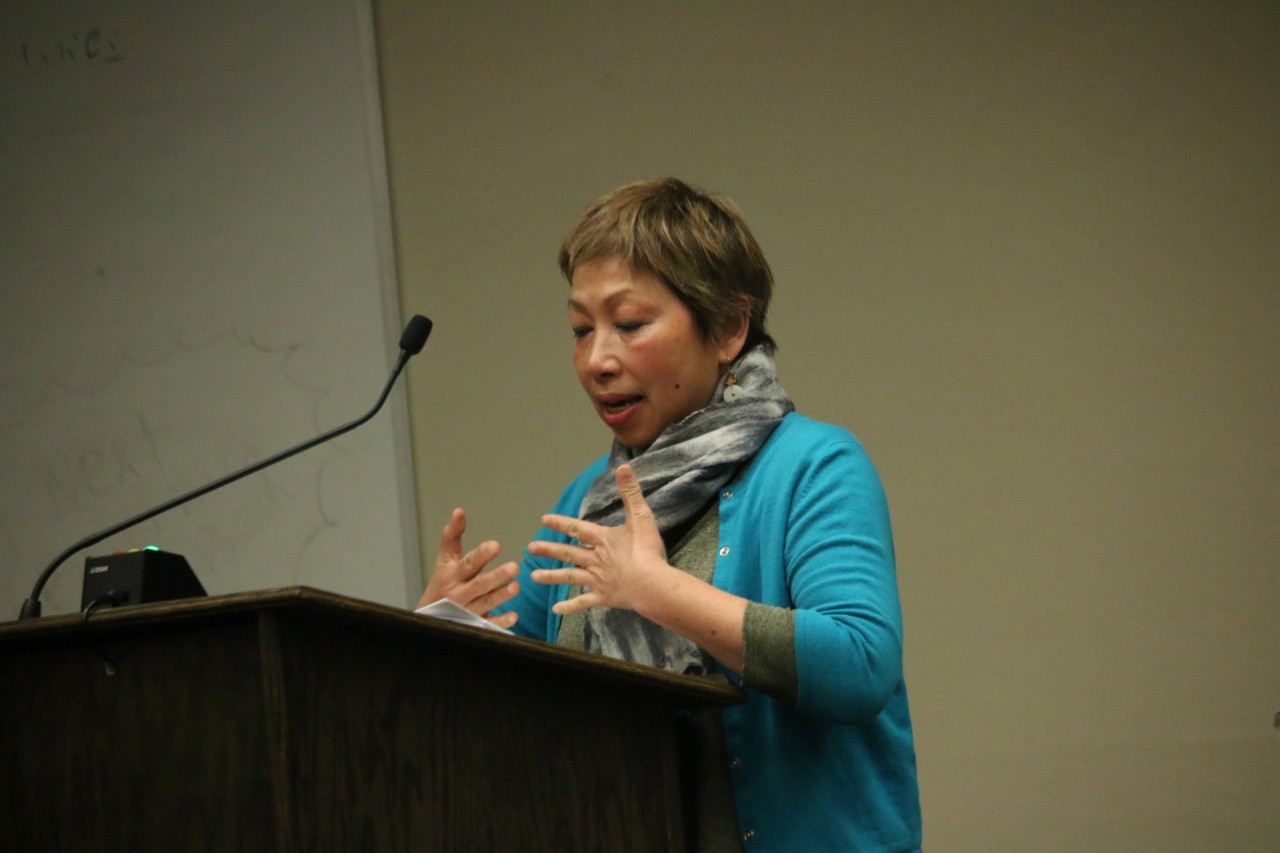
Kathina Szeto, owner of the downtown Hollister business, San Benito Bene, and founder of the Olive Festival, asked for clarification on whether the $750 tax for the promoters and $30 for vendors would be for an entire three-day event or on a per-day basis. Velazquez said the taxes would be paid one time for a year rather than just multiple days, which surprised Szeto, who quipped she should hold more than one Olive Festival.
Brenda Weatherly, of the Hollister Downtown Association, said she was grateful that the mayor had suggested a single business license to cover any event downtown.
While the other council members felt comfortable with the report, Sims — who has since resigned his post after announcing he was purchasing a house outside of his council district — reiterated that the rules can’t be changed without reworking the code.
“If you’re going to redo it, then let’s redo it and go through the process and not reinterpret something that’s already been approved,” he said. “That’s a slippery slope and it’s not a good precedence to set with any type of ordinance or tax.”
Paxton responded, “What’s happened with prior administrations is there was some directions to interpret the code inconsistent with what the code is. So we’re trying to clean it up.”
You must be logged in to post a comment.