

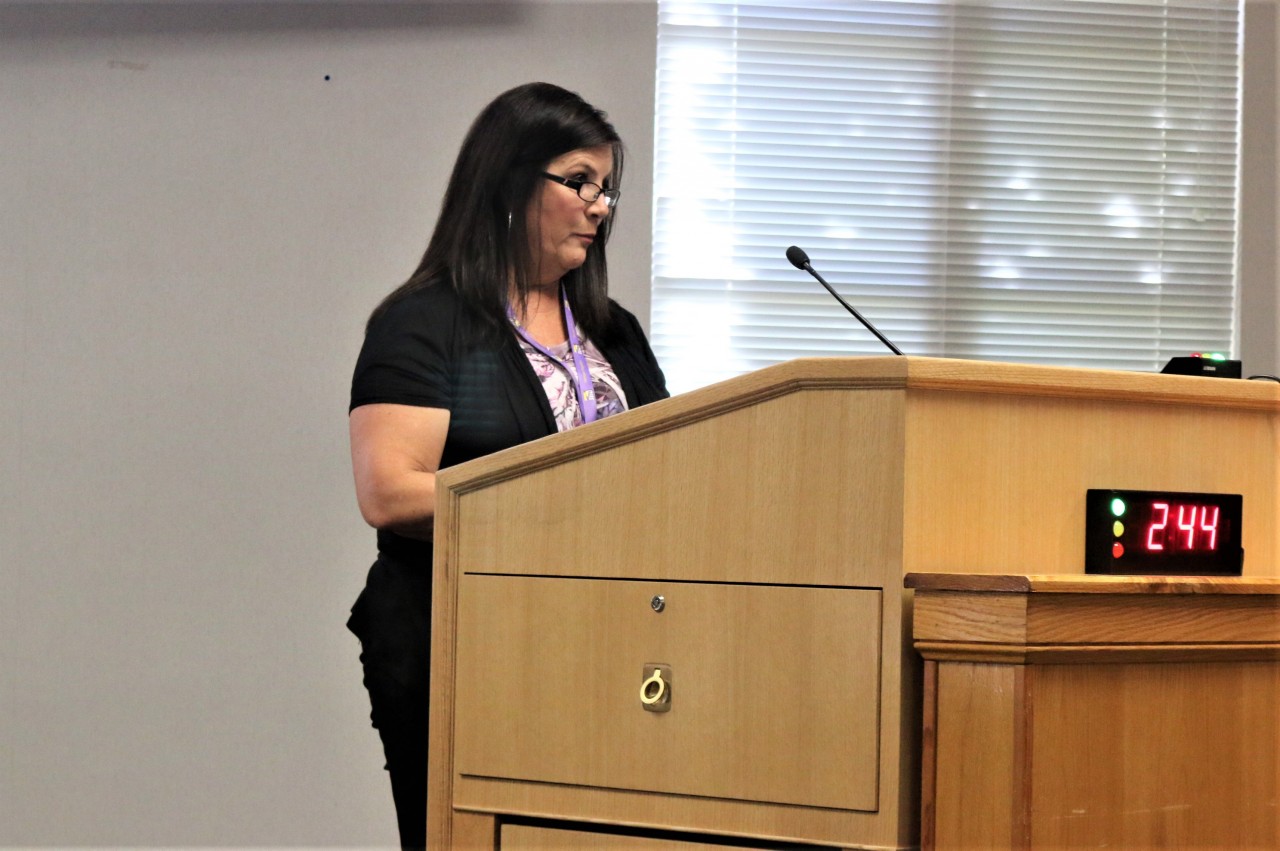
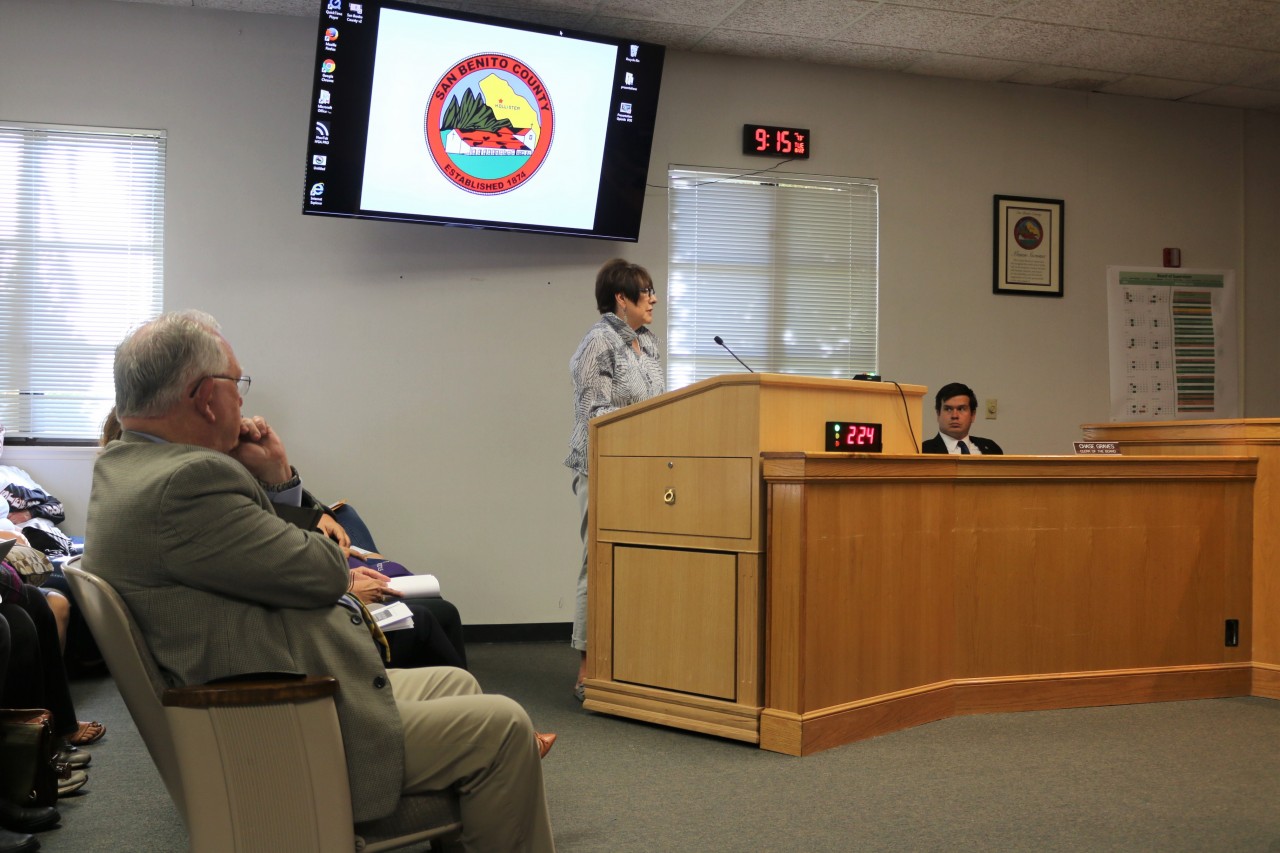
Members of the Service Employees International Union (SEIU) Chapter 521 showed up at the San Benito County Board of Supervisors meeting on Aug. 22 to voice their concerns as negotiations with the county reach what is believed to be the midway point, noted Suzy Caston, Chapter 521 president and a member of the negotiation team. She presented the board talking points from the negotiations in order to give them a clearer understanding, she said, of the chapter’s position.
Caston said the focus of the negotiations is on “recovery and retention.” She said union members have only received a 3 percent cost of living allowance (COLA) wage increase in eight years. She reminded the board that from 2009 to 2013, county employees were furloughed, which she claimed amounted to a 6 percent pay cut. From 2011 to 2013, she said the STEP increases were frozen, which equated to a 10 percent loss in wages. In 2014, she said employees began paying 7 percent of their retirement contributions, plus increases in healthcare costs of 205 percent to 270 percent.
“The employees here today provide services to this community that far exceed the level of pay they receive,” Caston said. “These people, your workforce, deserve to earn a living wage. We see the increased salaries being given to upper-level management; we see the positions being hired way above ‘A step’; we see the reclassifications and promotions being given; all that money is coming from somewhere.”
She said union employees realize the board recognizes the need to pay someone what they’re worth because it recently stated it needed to give a raise to a county employee because “they valued them and didn’t want to lose them to another county.”
“We’re asking that you make that same sort of investment in us,” she said. “We’re aware that our employees will never see those kinds of immediate increases to their wages, although we deserve it. We’re the ones who hung in there during the recession and continued to give quality services to our community. We’re the ones who stood strong in the hopes that you would come through with promises and make us whole again.”
Caston said she was coming to the bargaining table for the third time and she hopes the board would take care of the employees and show that they respect the workforce.
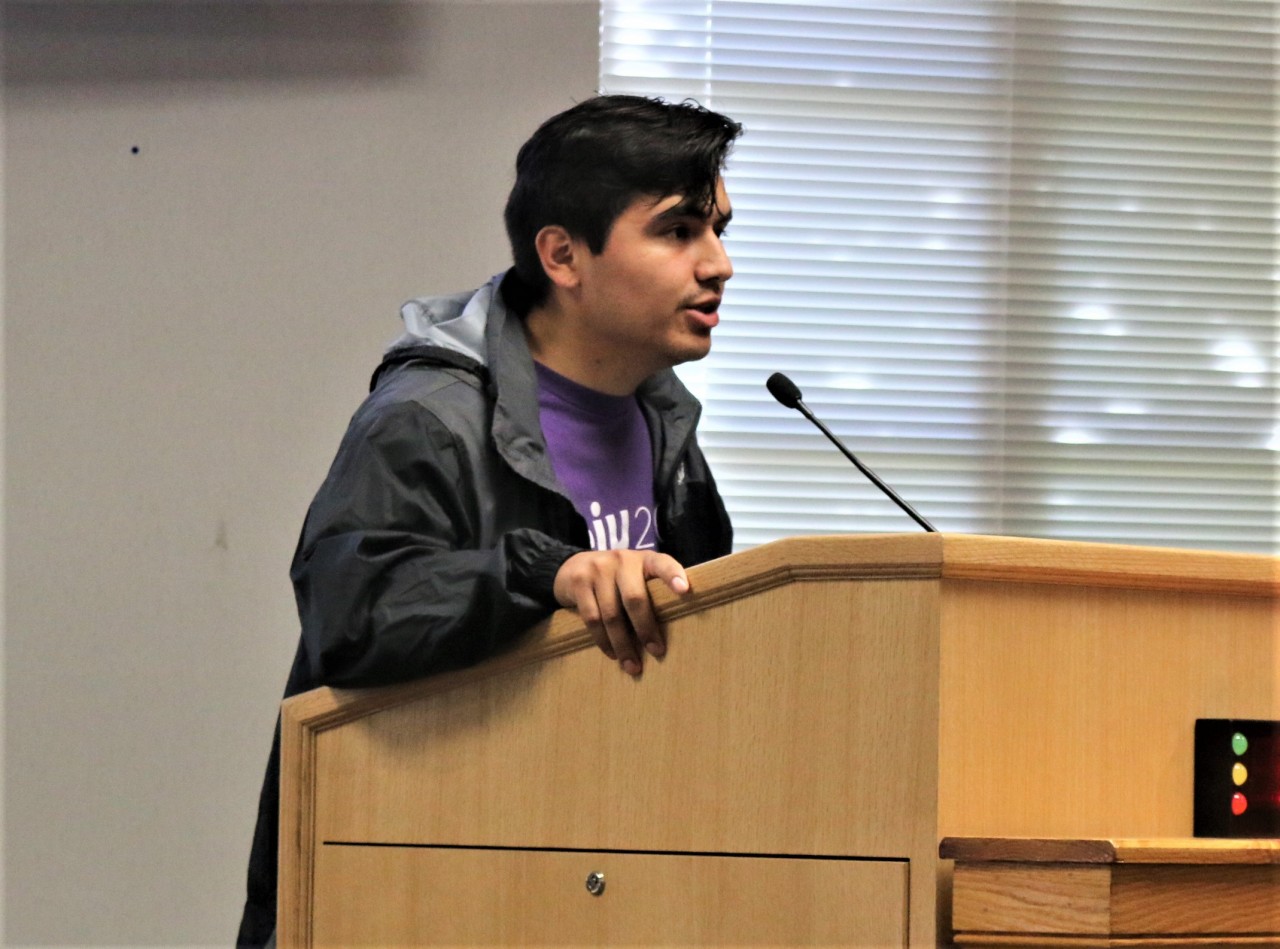
Cesar Sanchez, an organizer for the long-term care providers’ union, said at the beginning of the year, Governor Jerry Brown wanted to cut $623 million out of the IHSS (In-home Supportive Service) program. He said union members fought back and the funding was secured and that county employees are only asking for fair wages and benefits.
“Currently, homecare providers in San Benito County are making $10 an hour and care for the most vulnerable people in our county, those with disabilities and the elderly,” Sanchez said. “Last week, we sent a bargaining notice to you and we hope to go to the bargaining table and have a great negotiations with you.”
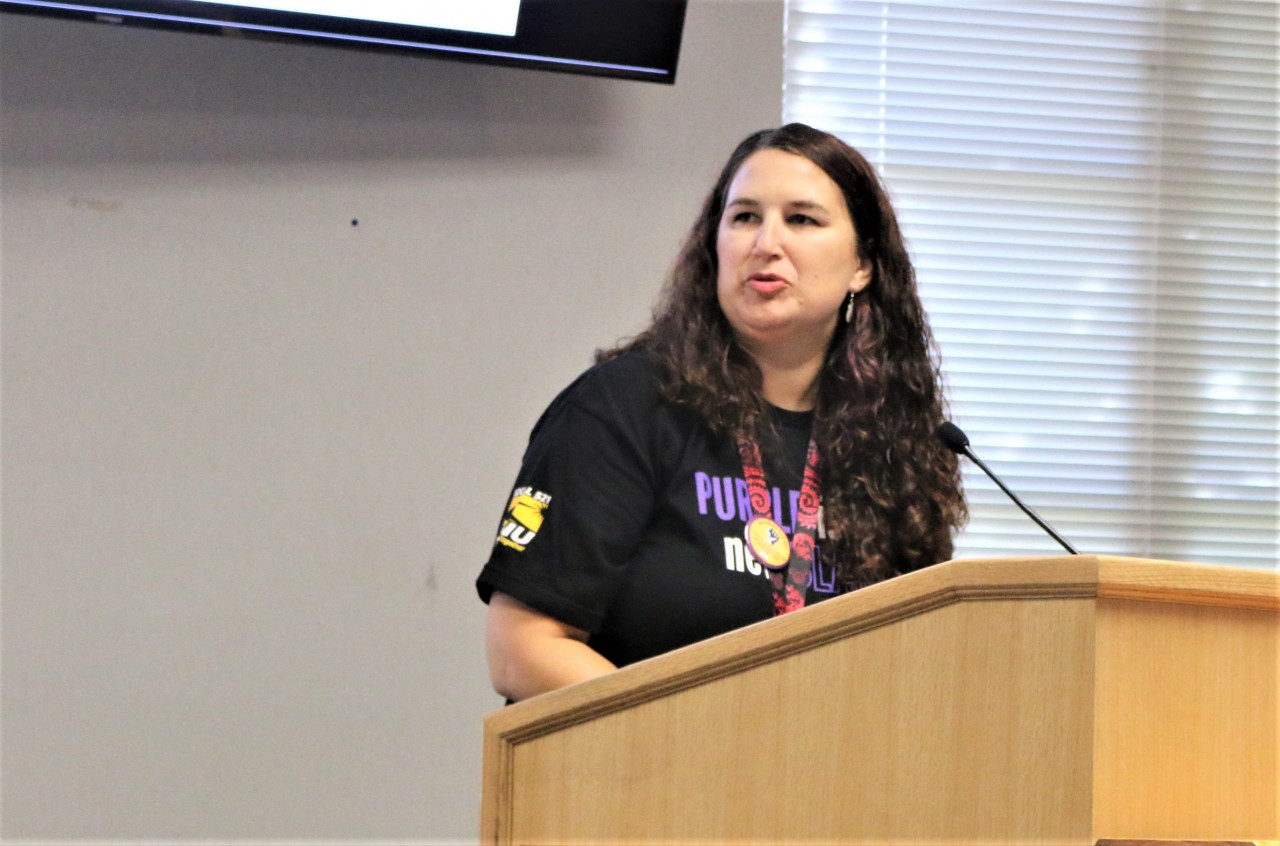
Several employees got up to tell their individual stories of service and sacrifice. Maggie Sahagun told of how her family moved to the county after losing their home in Chico. She said her wages are so low that she must choose between which bills to pay, while her husband commutes to another county, most often returning long after their children have gone to bed. As one who approves people seeking healthcare benefits, she said without workers to approve them and process renewals the needy will not be able to afford to buy food for their families.
“There needs to be a worker sitting at a desk,” she said, adding that the county has a retention issue, with eight employees leaving for every 10 hired.
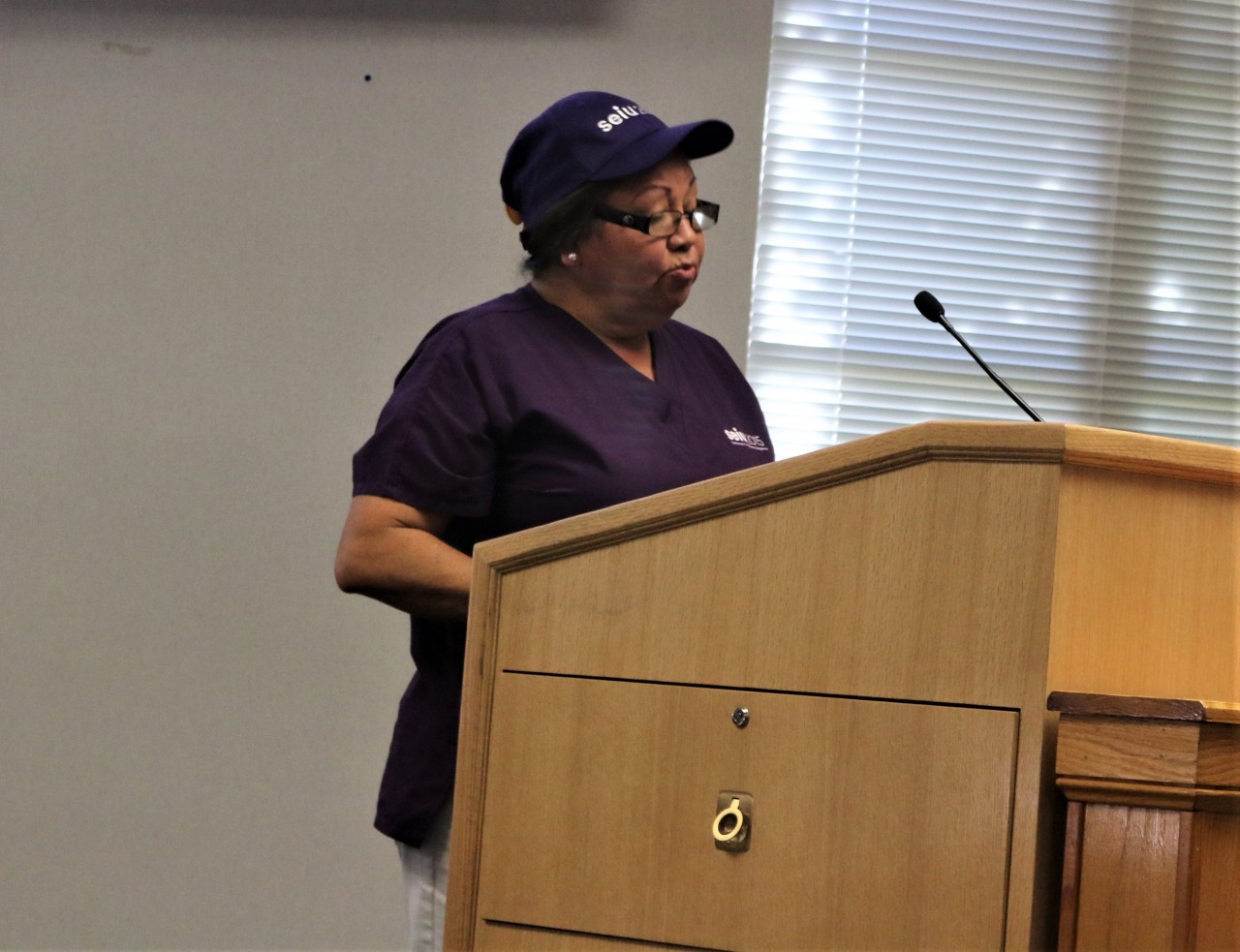
Beten Martinez told the board she has been a healthcare provider for her daughter for 30 years. She said her daughter must have 24-hour care for every basic need in order to survive.
“I do this like hundreds of other providers in San Benito County,” she said. “It’s been three years without a wage increase. It’s time to go to the table for negotiations.”
Cynthia Abrams had a similar story. She has been caring for her autistic son for 46 years. She said she was concerned about a new contract because there has not been one for the past three years.
“We’re ready to go to the table to negotiate a new contract and our main goals are wage increase and a return of our health benefits,” she said, “because we need to stay healthy in order to take care of our unhealthy people. There are over 350,000 of us in California doing these jobs. We work with the most vulnerable in the community, and we do it lovingly, but we want to be validated and receive compensation for what we do.”
Guadalupe Soloedo has been a caregiver for 15 years and said she watches over her 90-year-old mother. She told the board that they need to sit down with the union to work on the contract.
“We want to continue caring for our elderly and our disabled families,” she said. “It is so important that we make them feel loved and cared for.”
IHSS serves about 531,000 people in the state, at an average cost of $15,000 per individual, according to the California State Association of Counties (CSAC). It’s generally thought that the program saves the state’s 58 counties money because it is cheaper to keep people at home than to put them in a hospital or institution.
The disabled and elderly over the age of 65 are eligible for Medi-Cal, and most caregivers in the IHSS program are related to those being cared for. After Gov. Brown shut down a trial program called the Coordinated Care Initiative (CCI), which was supposed to coordinate services provided by Medi-Cal and Medicare, the task fell to counties. The goal of CCI was to save money. It didn’t, and in January the state finance department sent out letters to every county informing them CCI would end June 30.
Other factors will compound the price tag, according to a Los Angeles Daily News story. There will be a “rise in caregivers’ pay as the minimum wage increases and new federal laws require overtime for in-home health workers and state lawmakers in 2016 gave caregivers three paid days of sick leave and restored funding for hours cut during the Great Recession.”
Demand for IHSS will only continue to rise as the state’s citizen’s age and more people enroll in Medi-Cal. Counties can’t cut or alter the program to save money, according to the California State Association of Counties.
Because the union members’ statements were not on the agenda and only part of the public comments portion of the meeting, there were no comments from the board, as Chairman Jaime De La Cruz thanked them and they filed out of the room.
Dana Torres Wong, of the San Francisco-based Renne Sloane Holtzman LLP law firm, is representing the county during negotiations, which began in July. She said she could not comment while negotiations are underway. Caston, however, told BenitoLink by email that the current MOU/contract expires at the end of September.
“Our goal for negotiations is to help retain employees here in San Benito County, many of whom have been leaving to work in other nearby counties because they can’t keep up with the cost of living here on what the County provides us in terms of wages and benefits,” she wrote. “It’s still too early for us to comment on specific numbers, but I will say our goal is to negotiate a contract that will help with retaining employees and also help our employees to be able to afford to live and work here.”
She also said that with better pay, the county will be able to recruit qualified people to help fill positions that have been open for months.
She continued, “We’re hopeful that the county will agree with us that the time is now to invest in its employees so we can retain the workforce we need to provide services to the community, because at the end of the day, that’s what this is really about: serving our community.”
For more information on IHSS, visit CSAC.
You must be logged in to post a comment.