

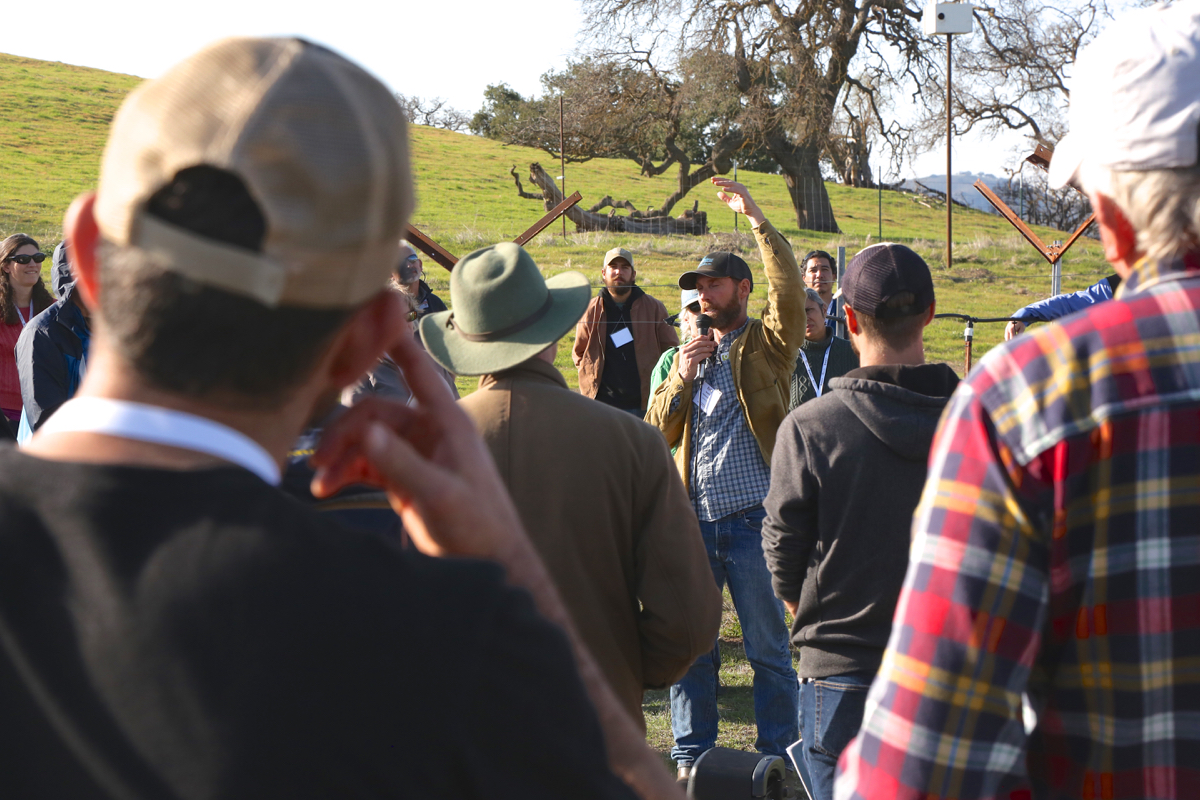



The EcoFarm Conference in Pacific Grove is an annual festival highlighting new holistic farming and growing ideas. This year, EcoFarm decided to kick off its 38th annual conference with a pre-event focusing on the topic of regenerative agriculture at the Paicines Ranch in Tres Pinos. The sold out event, with a diverse group of attendees, suggested high interest levels in the topic.
Regenerative ag is an approach to agriculture that is said to improve topsoil and increase biodiversity and microbe life. Specialists in regenerative research say it makes crops more resilient to climate and pest fluctuations and helps absorb more carbon dioxide in the soil. EcoFarm speakers talked about practices that were then showcased at different locations on the ranch. Some of the presenters included Tim LaSalle, former CEO of the Rodale Institute, Gabe Brown of Gabe Brown Ranch, North Dakota, Ray Archuleta of Soil Health Consulting, and many others. One guest was overheard saying it was exciting to have these “cream of the crop speakers” in attendance.
The day focused on key principles of the movement, as well as how the combination of livestock and crops could be managed together. Kelly Mulville of the Paicines Ranch showcased an experimental dry-land vineyard that was designed to allow livestock grazing below the vines and even do some fertilizing and trimming. The trellis system is put up a couple feet higher than the norm in order to keep the grapes and leaves out of the animals’ reach.
Mulville explained to the group that it also improves airflow and allows for a bigger variety of vegetation underneath the vines, creating more biodiversity in the micro-climate of the vineyard. This is a key principle in regenerative agriculture. According to Mulville, keeping the ground covered with vegetation at all times is much more beneficial to the crop as well as the whole system compared to tilling. Theoretically, vegetative cover is said to insulate and protect the ground from erosion and provides a better habitat for microbes to live in the soil. Paicines Ranch is unique in that visitors have the opportunity to see these new practices in the experimentation phase. Regenerative agriculture includes the concept of carbon sequestration, which is being studied at the ranch.
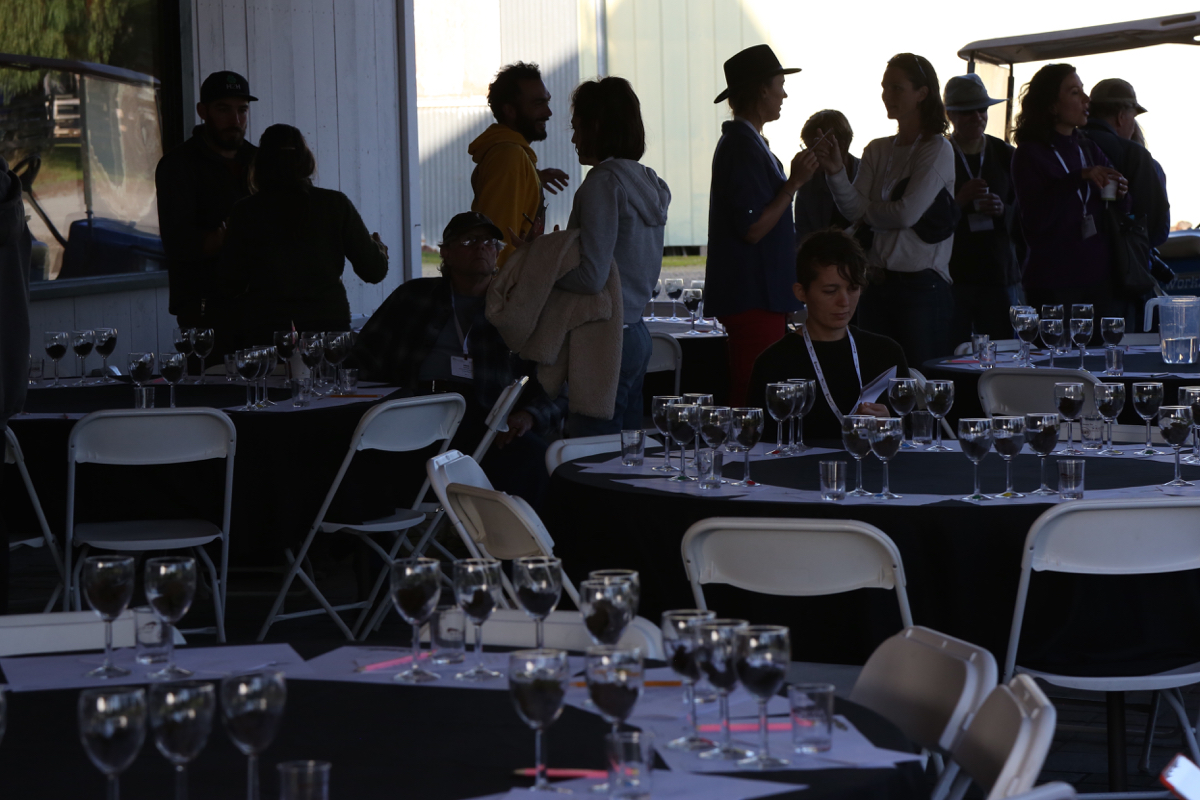
The day was topped-off with a soil tasting, well not actually, but more of a soil examination presented beautifully in dozens of stemmed wine glasses. The artistic display was hosted by artist Laura Parker who came up with the idea and has done other exhibitions in the past. Participants were presented with multiple wine glasses about half full of dirt. At the center of the table were fruits and vegetables, grown in the same soil that you have in the wine glass, as well as a pitcher of water. Guests were instructed to pour the water in with the dirt and swirl the glass, then smell and observe the dirt. Next, folks were invited to taste some of the food. Parker’s idea is to help everyone reflect on the soil in a less scientific way and in a more experiential way… to see if you can sense any connections between the two. The experience provided a fun and casual way to wrap up the day and gave the guests an opportunity to discuss new ideas together.
Overall it was a very hands-on educational day out in the field where people could come and ask questions about some of these new techniques and approaches to agriculture and its connection with the rest of nature. The event is the first in several days of the EcoFarm conference, which is based at Asilomar, in Pacific Grove. San Benito County will be a focal point this year, with a bus tour that visits and introduces attendees to several organic farms. BenitoLink reporter, Tom Leyde will be providing a separate article on that event.
You must be logged in to post a comment.