


La historia puede ser traducida en Español. BenitoLink ofrece la opcion de ‘Google Translate’ que esta localizada en el lado derecho de la pagina.
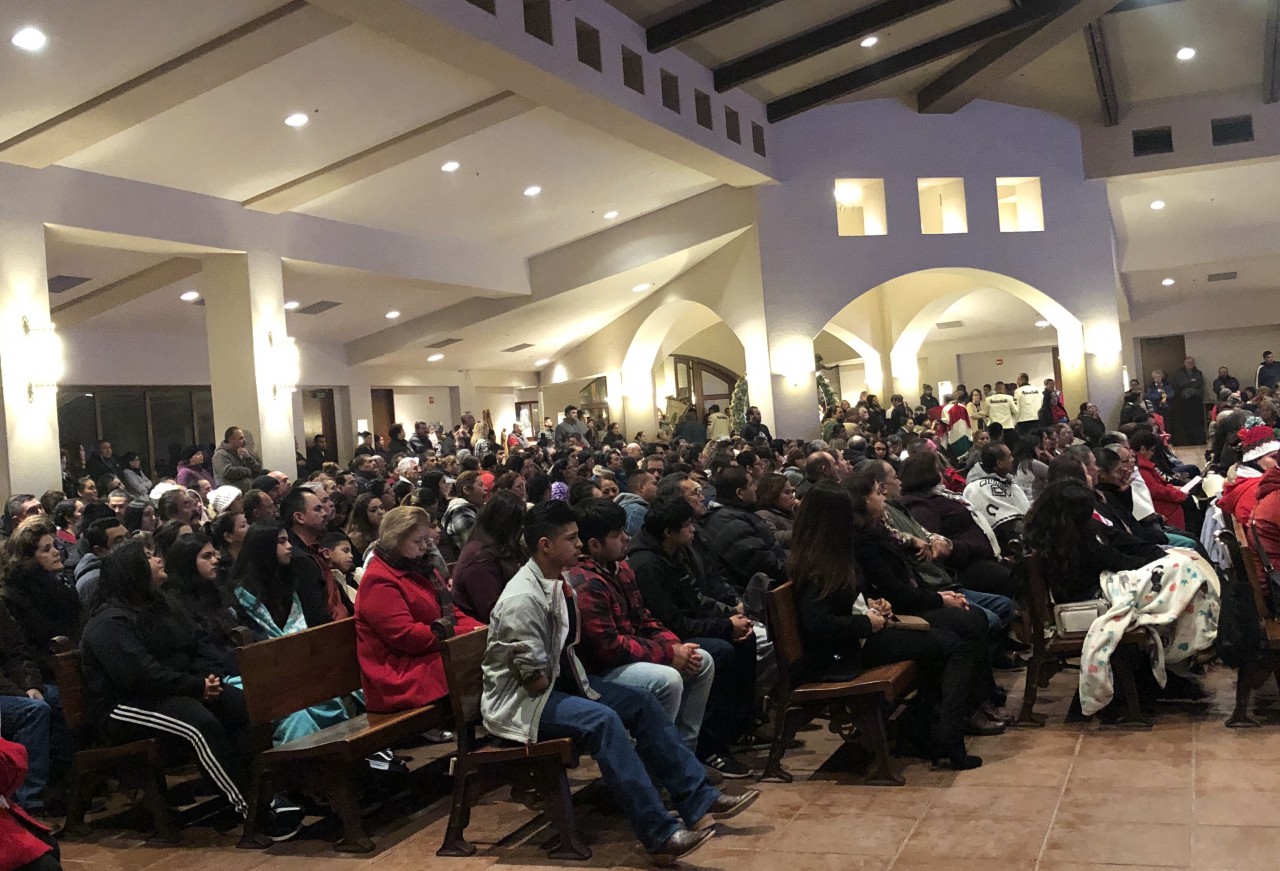
Hundreds of community members gathered to honor Our Lady of Guadalupe, also known as the Virgen de Guadalupe, at St. Benedict Church in Hollister on Dec. 11.
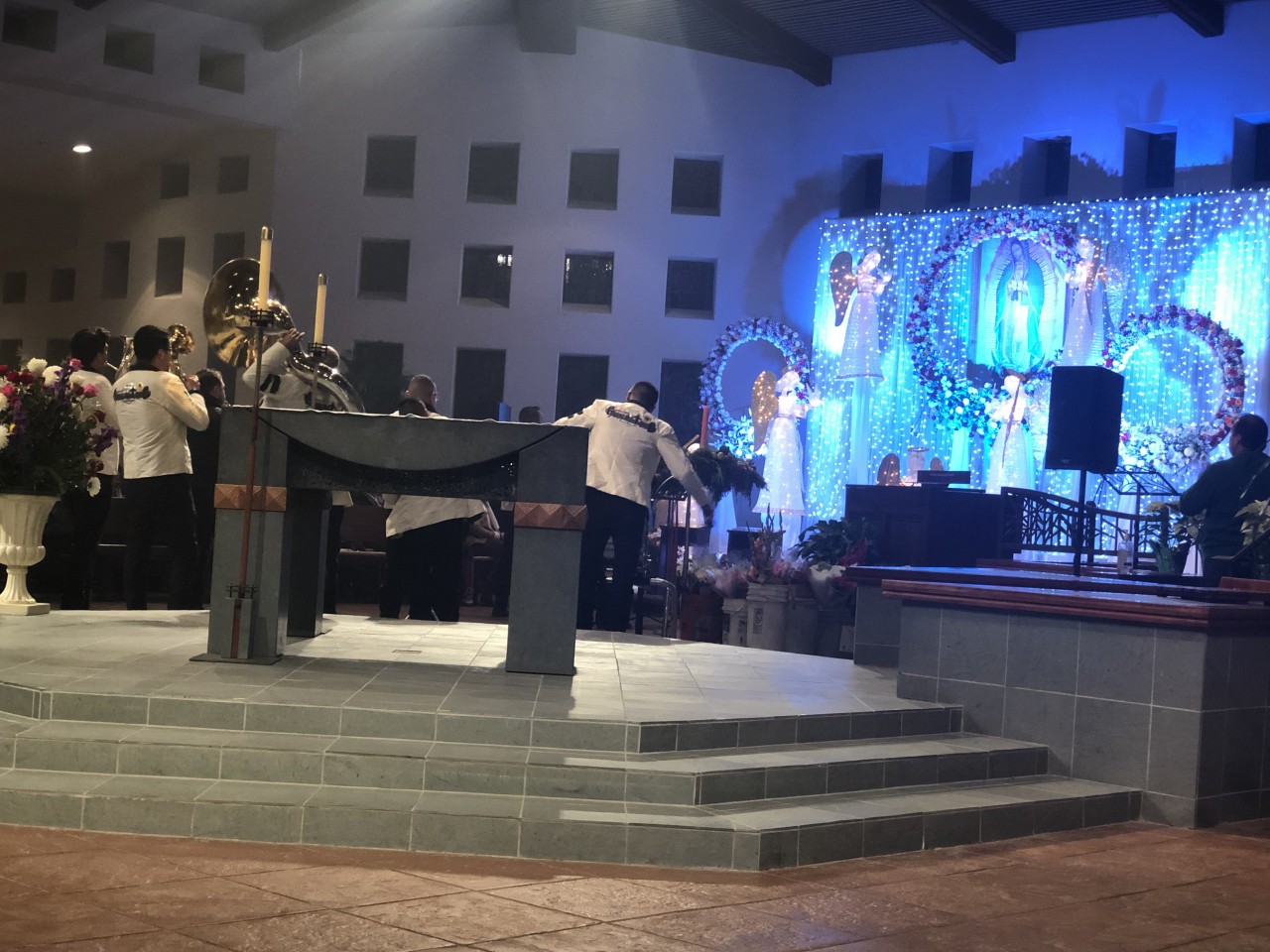
The annual feast, which stretched from 7 p.m to 6 a.m., featured performances by Mariachi Juvenil Corazon Jalisciense, Banda Principes de la Bahia, Fernando Vazquez, Grupo Cristo La Buena Nueva, Grupo Divina Misericordia, Tania Piña, Danza Azteca Kalpulli Izkalli, and Banda Guanajuatense.
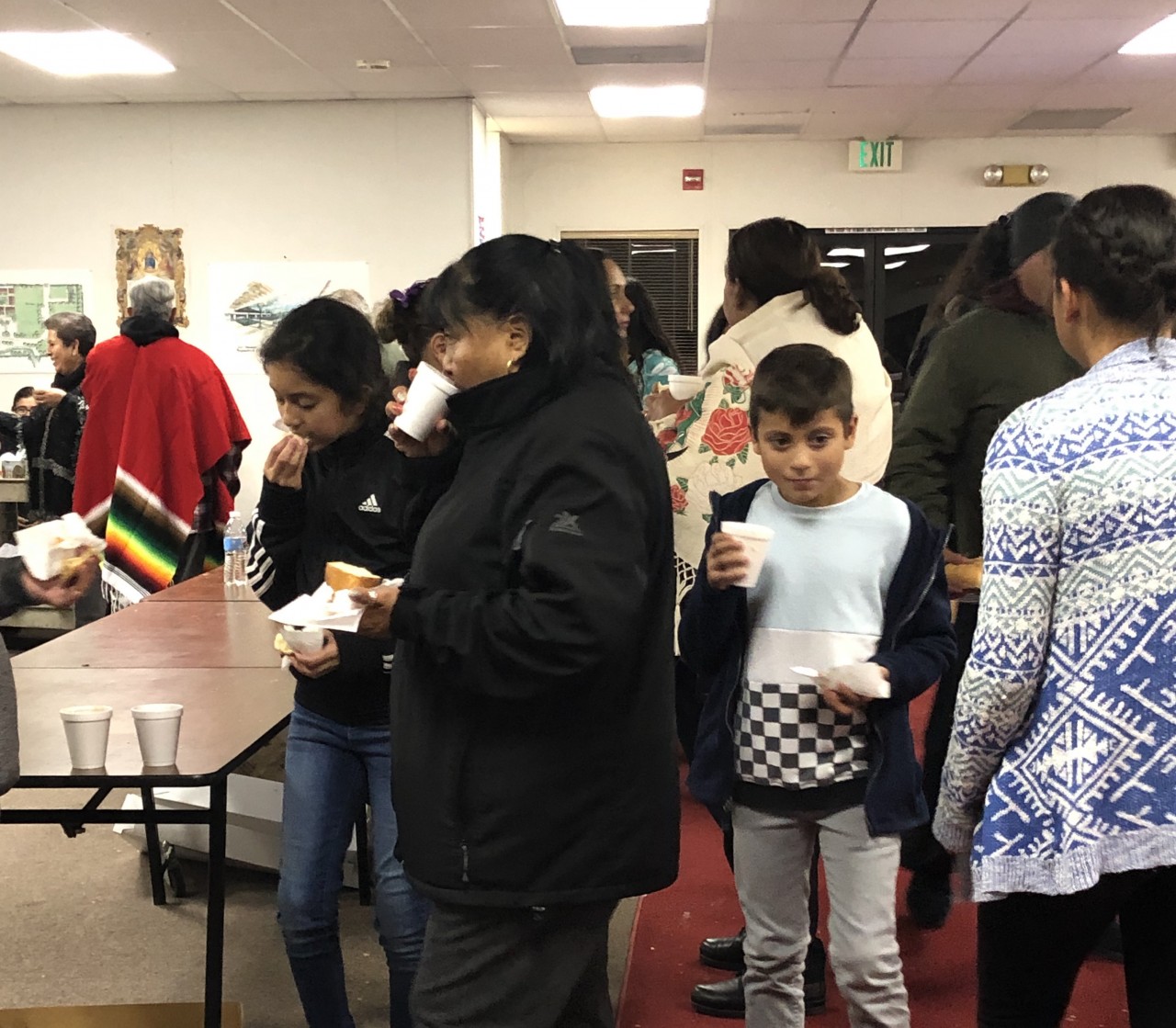
Throughout the night, people dressed in their warmest clothes brought bouquets of flowers, attended Mass, sang songs, recited the rosary and enjoyed coffee, ponche, atole, Mexican sweet bread and pie.
According to folklore, the Virgen de Guadalupe appeared to an indigenous peasant man named Juan Diego on Dec. 9, 1531. She appeared as a dark-skinned woman who spoke Juan Diego’s native tongue, Nahuatl. She asked that a shrine be built on Tepeyac hill, near what is now Mexico City. Juan Diego reported her appearance to the bishop twice, but he was not believed and was asked for proof.
On Dec. 12 that same year, the Virgen de Guadalupe appeared to Juan Diego again and told him to gather roses in his cloak, which to him seemed strange because roses did not grow in December. Juan Diego did as he was told and took the roses to the bishop. When he opened his cloak, dozens of roses fell to the floor revealing the woman’s image imprinted on the inside. The cloak is still on display today at the Basilica of Our Lady of Guadalupe in Mexico City.
While our Lady of Guadalupe is linked to Catholicism, she is more significant as a part of Mexican identity, culture and patriotism. For example, Miguel Hidalgo used her image when he launched his revolt against the Spanish in 1810. Labor leader Cesar Chavez used her image during the Mexican-American civil rights movement. These days you can see her image on clothes and cars. She is featured in songs like Mi Virgen Ranchera by Mariachi Vargas, where the lyrics express what the virgin has come to mean to the Mexican people.
“Tu nombre es arrullo, y el mundo lo sabe, Eres nuestro orgullo, mi México es tuyo,
Tu guardas la llave. Que viva la Reina, de los Mexicanos….” the song says. (Your name is pride, and the world knows it, you are our pride, my Mexico is yours, You keep the key. Long live the Queen, of the Mexicans.)
This sentiment could be felt at St. Benedict throughout the night as guests shouted “Que Viva La Virgen De Guadalupe! Que viva la Reina de los Mexicanos! Que viva la Guadalupana!” (Long Live Our Lady of Guadalupe! Long live the Queen of the Mexicans! Long live the Guadalupana!)
“Ella es nuestra madre, de nosotros los Mexicanos así nos dijo aya en el Tepeyac,” said Marina Castro of Grupo Divina Misericordia. (She is our mother, of us Mexicans, so she told us on the Tepeyac.)
“Estamos aquí para cumplir con nuestra obligación como danzantes, como Mexicanos, y como parte de esta comunidad,” said a dancer from Danza Azteca Kalpulli Izkalli. “Gracias a Tonantzin, a la madrecita, que por ella estamos aquí por ella nos da la esperanza de seguir adelante.” (We are here to fulfill our obligation as dancers, as Mexicans, and as part of this community. Thanks to Tonantzin, to our mother, who gives us the hope to keep going.)
The festivities came to a close after 11 hours of music and entertainment. Participants then headed to work, or headed home, or stayed for menudo early in the morning.
You must be logged in to post a comment.