

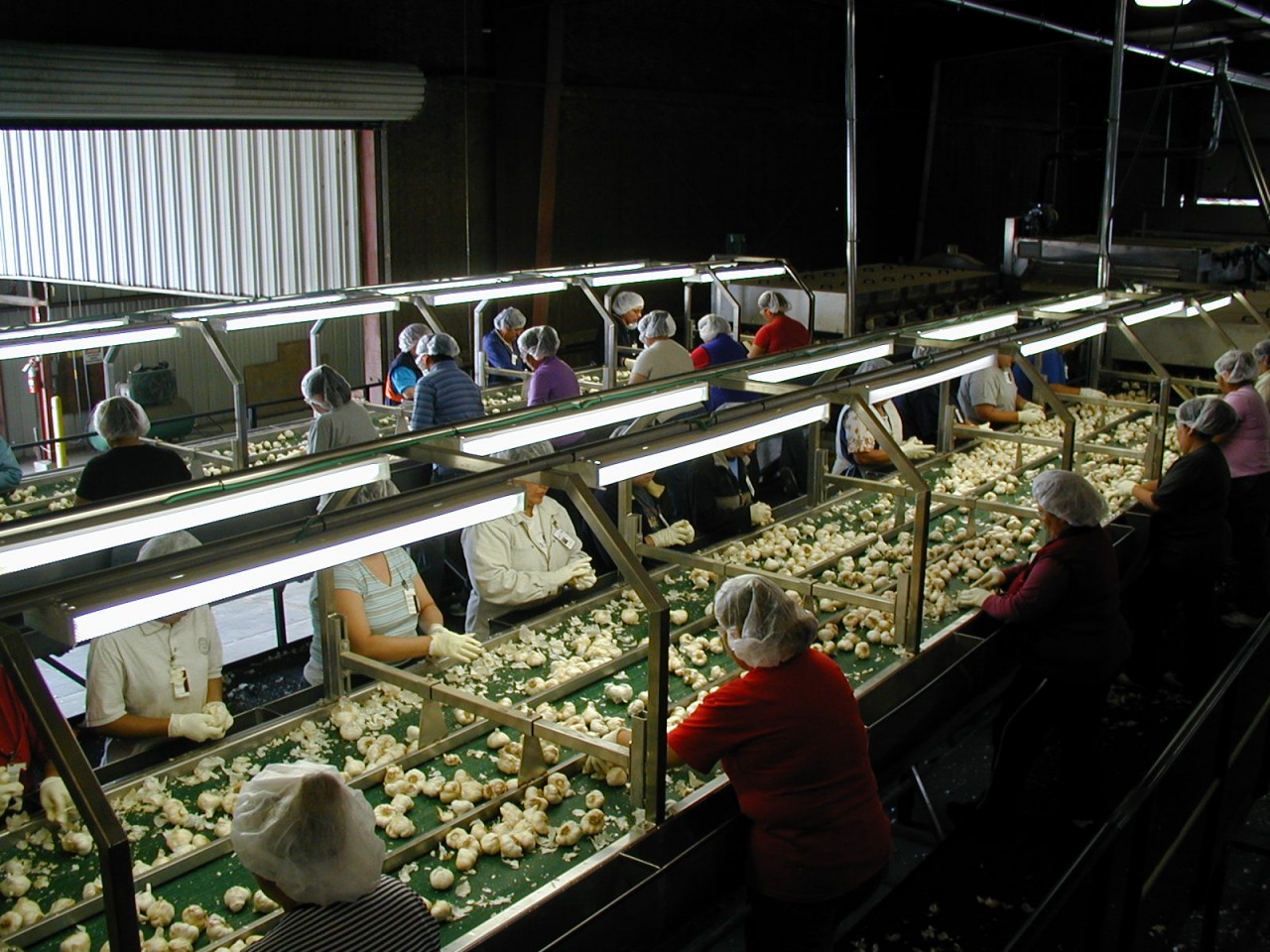

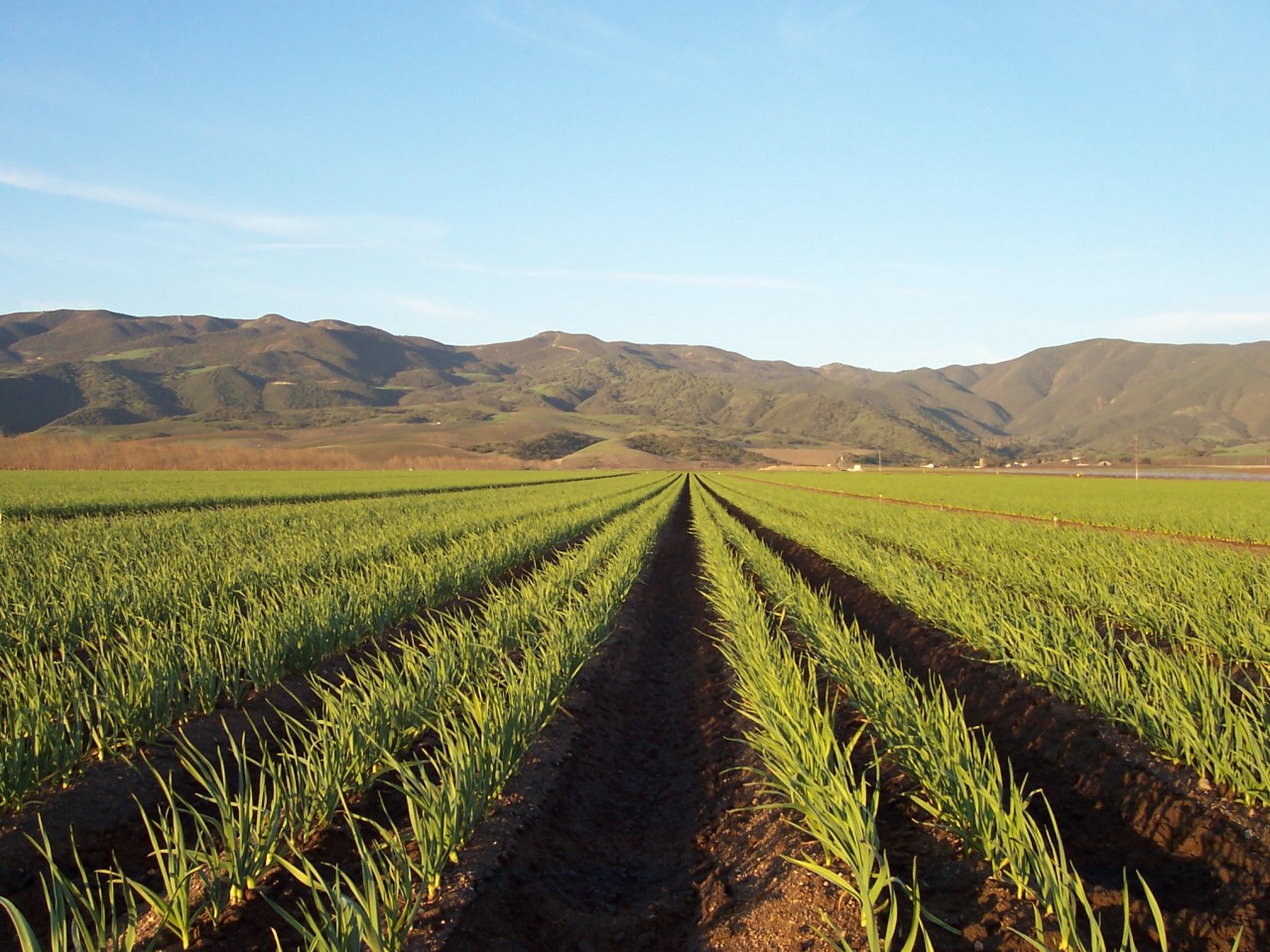
The Christopher family has been in the agriculture business in and around Gilroy and San Benito County for the better part of 125 years. In the beginning, family patriarch, Ole Christopher, worked the land himself. As the family’s holdings grew and the company shifted from being the dominant prune grower in the Santa Clara Valley to the largest grower, packer and shipper of garlic in the nation, the company now employs nearly 900 workers at its Gilroy plant.
Even though California is leading the way in raising the minimum wage, CEO Bill Christopher and his son, Ken, the company vice president, knew they couldn’t wait because they simply were not finding all the people they needed willing to work for $10 per hour.
Ken Christopher said they decided to move now rather than later after experiencing a shortage of some 50 workers at the packing facility last summer. They dipped their corporate toe in the water and raised their minimum wage by a dollar per hour.
“There was no change,” Christopher said. “There wasn’t one more new applicant, so we were looking at cutting back on production. We were losing sales because we didn’t have the workforce to make the product.”
So last December he met with his father and told him that he wanted to try something different.
“We heard about the ‘Fight for $15’ movement with demonstrations in New York City and Los Angeles to make sure there’s a living wage for the workforce,” he said. “I said, why don’t we go to $13 on Jan. 1, and then pledge to go to $15 by 2018, and get us in sync with the movement.”
Christopher said they had no idea what the effect would be.
“We went from having 50 open positions and two weeks later we filled all the open positions and now have 150 on a waiting list,” he said.
Six hundred people who work on the production lines received the $2 raise in January, bringing the minimum wage up to $13. The remaining 300 employees, who are supervisors, forklift drivers, quality control, loading dock workers, accountants and sales and marketing, were already being paid above minimum wage.
While a $2-an-hour raise might not seem like much at first glance, Christopher pointed out that every dollar increase in pay equals $2,300 annually.
“So, by going up $2 our employees are making $4,600 more,” he said. “Now they make $5,000 more per year than the California minimum wage. When we go to $15, they will be making over $8,000 per year than the California minimum wage.”
In agriculture, wages and immigration go hand-in-hand. Christopher said he and his father watched the election closely.
“Secretary Clinton was broadly framed as being more pro-immigration and anti-business, while Trump was seen as anti-immigration and pro-business, so no matter who won the election we thought we were going to have some challenges,” he said. “Now with Trump we’re cautiously optimistic that he’s going to be pragmatic and take a pro-business approach that includes what all California farmers want, which is comprehensive immigration reform. We have to find a way to get all these people out of the shadows and into a legal position.”
Because of the skyrocketing rise in the cost of housing, many who work in agriculture cannot afford to live near where they work. Christopher said the company wants to do everything it can to assure its employees have a real living wage. He said the majority of those who work at the Gilroy facility live within a 50 mile radius, many in San Benito County, where many acres of Christopher Ranch garlic is grown.
On the housing front, Christopher said the company does provide some housing for its seasonal, or H2A, labor.
“We do this because those are jobs we just can’t fill here,” he said. “They’re harvesting jobs, like our bell peppers or corn.”
After its decision to raise the minimum wage, Christopher said some have accused the company of being self-serving. He said that while the raise did solve the immediate employment problem, what he would like the community to know is that if in 2018 the company is at full employment it will still raise the wages to $15 per hour, “because it’s the right thing to do.”
“We believe in corporate responsibility,” he said. “Companies that can do more should do more. It’s not a solution for every company and we’re not trying to be the standard-bearer for what all businesses should do, but we want to be an example for businesses that are pretty healthy and can make that kind of investment on their people.”
Christopher Ranch has remained the largest producer of garlic products in the U.S. (China grows several billion pounds) even during the five-year drought, though it did have to cut back growing on some of its acreage. Last summer, though, Christopher said the company acquired more prime land in the Central Valley.
“As land has transitioned from ag to homes around Gilroy, we’ve kind of gone out to the Central Valley around Firebaugh, Los Banos and Fresno,” he said, “so, we’re optimistically projecting to harvest and ship 90 million pounds for the next crop.”
You must be logged in to post a comment.