

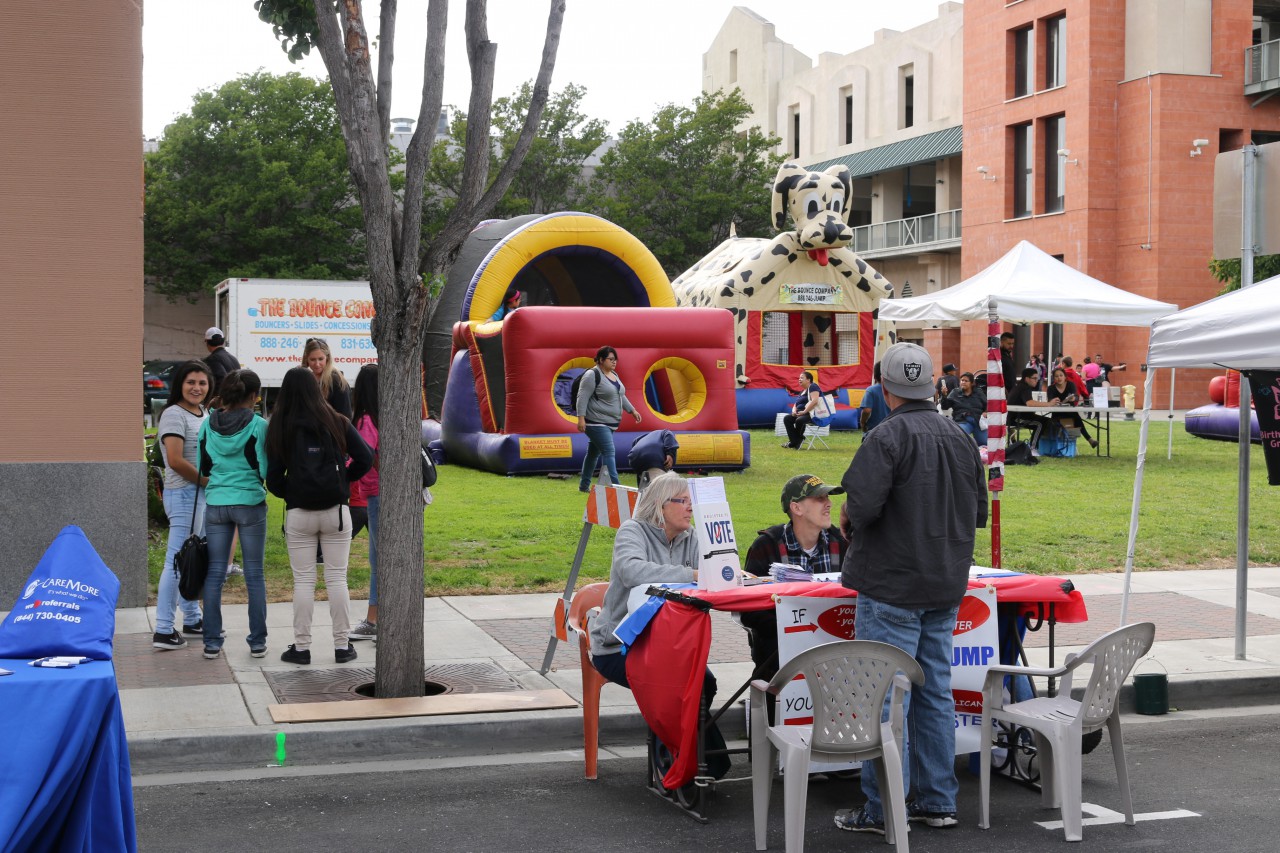
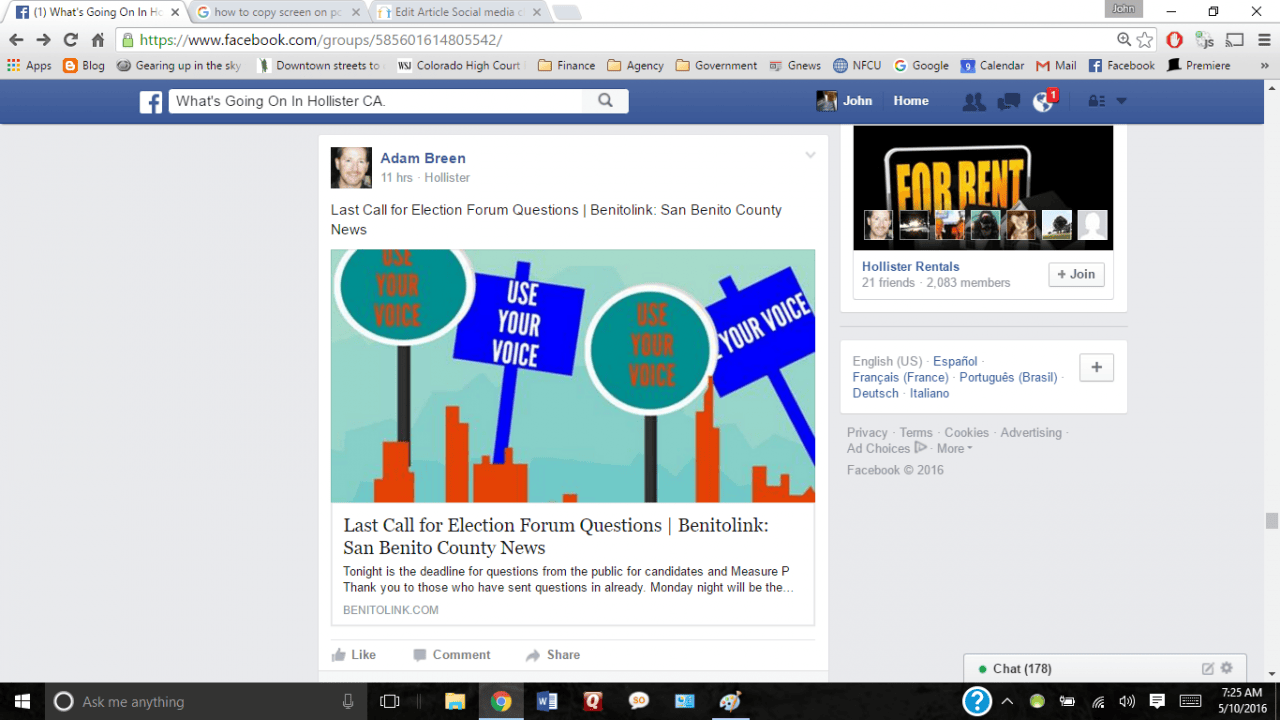
There is a war of words going on in Hollister—primarily on Facebook—between city council members themselves, and between the council and the public. The hot button right now is the city’s proposed sale of what is commonly called the 400 Block on the corner of Fourth and San Benito streets. But it need not be this single topic to launch a tirade from all sectors of the community.
Conversation has heated up over concerns about potholes, the homeless, and smelly water. Facebook, Instagram, and Twitter have seemingly obliterated all barriers and inhibitions when it comes to expressing outrage directed toward one’s neighbors. elected officials — or colleagues.
As has been the case throughout political debate, technology has pushed the boundaries of honest discourse beyond the brink of civility. When the Political Reform Act was passed in 1974, in response to the break-in at the Democratic National Committee’s headquarters in the Watergate office complex in 1972, and ultimately the resignation of President Nixon for the cover-up, no one could have foreseen the advent of social media and its role in politics.
According to the five-member, non-partisan Fair Political Practices Commission (FPPC)—established under the Act—lawmakers and voters have changed the Act over time to account for the ever-changing landscape of campaign finance and to ensure the integrity of California’s public officials. For example, ballot measures such as Proposition 208 (1998) and Proposition 34 (2000) dramatically altered the rules every candidate and elected official must follow when running for office.
The Act regulates campaign financing, conflicts of interest, lobbying, and governmental ethics. The Commission’s objectives are to ensure that public officials act in a fair and unbiased manner in the governmental decision-making process, to promote transparency in government, and to foster public trust in the political system.
Politicians have latched on to Twitter and Facebook, in particular, to shame or badger their opponents and spread the gospel of politico-ism: the smarmy over intellect, visceral over factual. It would be understandable if the masses believed this to be a new techno-phenomenon, but it isn’t. In the past century, other mediums have irreversibly transformed politics. Radio brought politicians off grandstands and into people’s homes for quiet, intimate talks. Television transformed campaigners to good looks and sound bites. Smartphones have further reduced political messaging to 140-character hashtagged diatribes from anonymous virtual assailants.
While some look at social media as a tool of the illiterate who incessantly share their every thought or meal throughout the day, Pierre Omidyar, founder and chairman of eBay and CEO of First Look Media, wrote in THEWORLDPOST: “I believe that social media is a tool of liberation and empowerment…the freedom to communicate openly and honestly is not something to be taken for granted. In countries where traditional media is a tool of control, these new social channels have the power to radically alter our world.”
Another benefit to politicians, social media makes it possible to raise money without investing money in expensive mailing campaigns. Some campaigns, according to political pundit, Tom Murse, who wrote that “…some campaigns have used so-called ‘money bombs’ to raise large amounts of cash in a short period of time. Money bombs are typically 24-hour periods in which candidates press their supporters to donate money. They use social media, such as Twitter and Facebook to get the word out, and often tie these money bombs to specific controversies that emerge during campaigns.”
Mark Medina, who is running for San Benito County District 1 supervisor, did just that when he used Facebook’s Instant Messenger to ask for campaign funds by posting: “I am writing this message to ask if you can monetarily contribute to my campaign. The campaign is going well and I am using less costly alternatives such as Facebook, walking door to door along with attending any and all public events to educate people about why I am running for District 1 Supervisor. There is one month remaining until the voters cast their vote and my campaign will be mailing out information enticing voters to vote for me on June 7th. Unfortunately the printing cost and postage fees add up and this requires me to look for additional funds to get me over the finish line. If you can contribute I can pick up the contribution in person or they can be mailed to… Thank you for believing in me and allowing me to possibly represent San Benito County as the District 1 Supervisor.”
Undeniably, what social media is doing globally, as well as in Hollister, is allow politicians to speak instantly and directly to the public without investing any money, thus circumventing traditional medium, such as television and newspapers. And if the message goes viral, such as the 400 block dispute has done, public opinion is nearly instantaneous. And social media empowers people to join together, as Mayor Ignacio Velazquez has done when he encouraged citizens to petition elected officials or draw up a referendum to leverage against perceived special interests or influence of powerful lobbyists.
Hollister Mayor Ignacio Velazquez has said repeatedly that he cannot vote or comment on the 400 Block issue during council meetings because he believes it may be a conflict of interest because he owns The Vault, which is adjacent to the disputed plot.
But seemingly within minutes of the city council voting 4-0 to approve the development of the 400 Block, he did, in fact, voice his opinion on Facebook: “I’m EXTREMELY disappointed in my fellow council members’ decision to give away the most important property in our city to developers to build more housing,” he wrote. “The city’s portion of the sale will be a whopping $50k. The 400 block is the heart of downtown and of the city and now it will become apartments. The 400 block could have been a public plaza that would have provided entertainment for hundreds of people every weekend and during the week also. When are we going to learn that giving away our community and souls to developers is not the answer to our future!”
What might seem to some hypocritical or, at least, a potential ethics issue, Jay Wierenga, of the FPPC told BenitoLink, “As far as what anyone says in their own voice, that’s free speech. Social media is a form of free speech.”
The mayor said on Facebook that more than 1,000 residents responded on the What’s Happening in Hollister page, most in support of his position.
Pati Hughes-Fudge wrote: “If the County had opened the topic, and it had been brought up for discussion, I think the public would have weighed in heavily. If you think about it, that area has had quite heavy use by families and different functions through the summer and on weekends. But lie many “small town” decisions, you have a few people with ‘vested interests’ and agendas and they take precedence over what is really in the best interest of the whole.”
Ryan Terry suggested the community start a petition to cease all building and other developments until Highway 25 is fixed. Dawn Koistinen wrote heatedly that people shouldn’t bother taking their problems to the city council and claimed, “…mine told me that ‘I don’t have a clue.’” John Cavahaugh wrote, “Despots hate the truth. Keep posting the information…the community needs to stay angry and let these traitors know they made career decisions.”
In a demonstration of social media’s immediacy and impact, when Charisse Tyson, owner of Johnny’s Bar & Grill, wrote, “Start a petition and I’ll get signatures,” the mayor quickly responded, “Yes, it can be overturned. A group is already forming to bring it to a vote of the people.” Then Tyson answered back, “Count me in.”
Michelle Ferrari-Cory questioned, “If Hollister wanted to make this a public plaza, they should’ve done so years ago. This portion of land has set for the most part unused, and now that developers have purchased it we’re complaining about what we should’ve done with it but didn’t do. The parking structure has been useless as well. I guess I just don’t understand why we’re just hearing about ideas for putting the plaza or community center on the land NOW and it wasn’t even a topic until the property was purchased.”
Velazquez responded in minutes with, “It has been a topic many times, but it gets shelved in favor of a commercial project.”
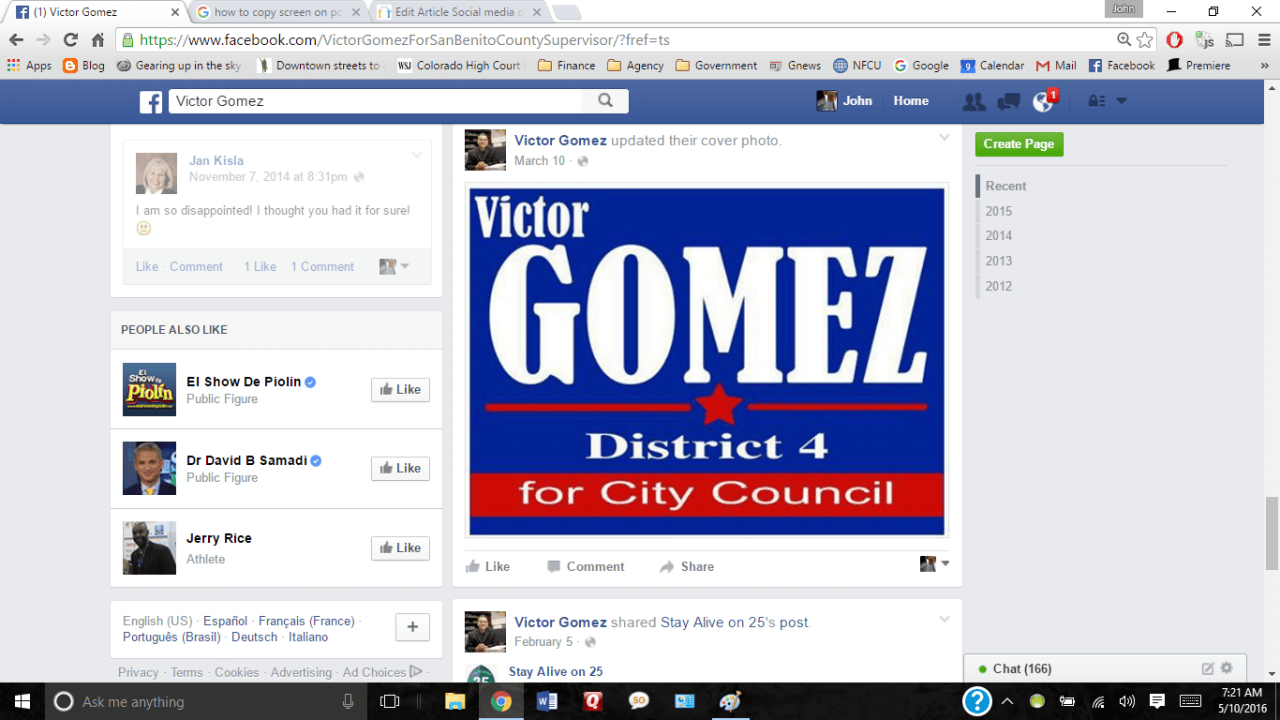
Scott Magness said that while he disagreed with Councilman Victor Gomez’s view on the topic, he shared Gomez’s responses to his post: “Hello Scott Magness – thanks for the post. 1) The 400 block has been zoned ‘commercial’ for decades. It was never intended to be used as a park and it’s inconsistent with the city general plan. 2) Incorrect – I received an overflowing amount of support for the project from hundreds of residents including dozens from District 4, heavily outweighing the opposing side. 3) I support infill projects to help prevent urban sprawl.”
The mayor later responded to Justin Borelis’ contention that, “…in reality building houses is the only way to make Hollister bigger and increase revenue for the city at this time,” with, “…our real issue is that we don’t know what we want to be. We can’t be a tourist destination while at the same time a suburb of San Jose or an agricultural community that wants to develop all the farm land. The biggest issue is that for every home we build, we go deeper into the hole. I used to believe we could turn this around, but we keep making exceptions for friends, because, ‘we can trust them to do the right things.’ I’m sorry to say that we are headed for big trouble by continuing the path that we are on.”
Gomez, who primarily uses Facebook to campaign in favor of Measure P, among other issues, and his bid for reelection, commented on Velazquez’s Facebook criticism of the council’s decision, “The mayor has gone on a social media bash saying he couldn’t vote in this issue. That’s false, he had every right to do so yet decided not to vote. What a shame.”
Before the council vote took place, supervisor hopeful Medina posted on Councilman Karson Klauer’s Facebook page: “Tomorrow there will be an important vote and I have no doubt the four of you have spent numerous days if not weeks contemplating on what is advantageous for the City of Hollister and San Benito County. I personally believe you have considered all the facts, figures and data when arriving at your decision. You have been elected by your constituents and your vote must be based on what is profitable for Hollister’s future with all this being said please vote on what the facts, figures and data show is best for the City Of Hollister.”
Just before voting for the development plan, Klauer said it was one of the toughest decisions he’s ever made.
The San Benito County Board of Supervisors thinks the role of social media important enough to add it as an agenda item at its May 10 meeting. The county recognizes a need to augment traditional communication methods with social media in order to reach a broader audience, in a move to incorporate social media policy guidelines into the County Administrative Manual.
“This need primarily stems from public demand and the rapid growth of social media use by other local, state and federal government entities as an indication that social media can be used effectively to enhance constituent communications,” according to the agenda’s stated purpose. “In general, the County supports the use of social media technology to enhance communication, collaboration and information exchange; streamline processes; foster productivity improvements; and further the goals of the County and the missions of its departments, where appropriate.”
“However,” the guide warned, “the use of social media presents opportunity and risk to the County and individual County departments. Therefore, their application must not compromise data confidentiality and integrity. The same standards of conduct, principles and guidelines that apply to County of San Benito employees in the performance of their assigned duties apply to employee social media technology use. The purpose of this policy is to provide initial guidance for all County of San Benito employees who use Social Media and Social Media venues to engage with customers on behalf of San Benito County.”
You must be logged in to post a comment.