

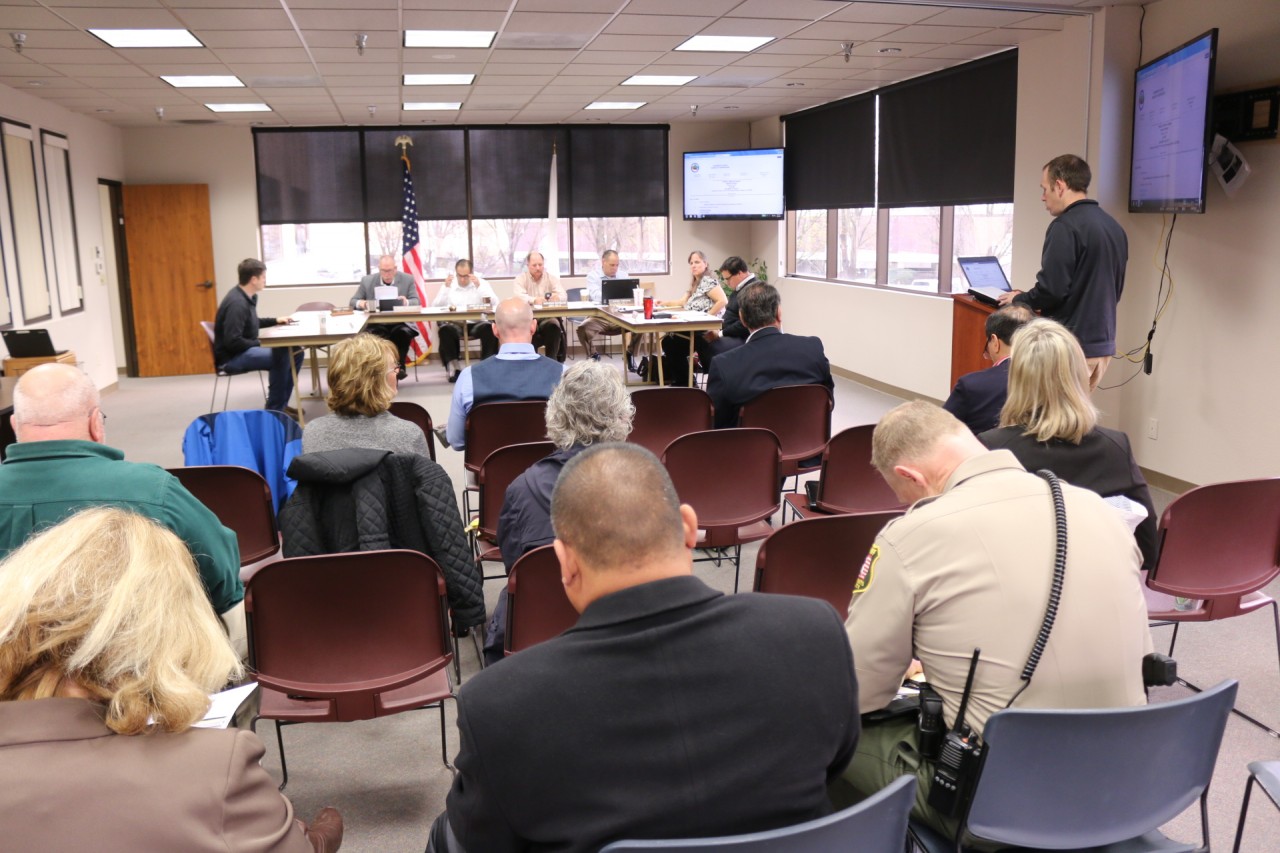
Once again, Kevin O’Neill, director of the San Benito County Office of Emergency Services (OES), stood before the Board of Supervisors to inform them about the mounting costs from the storms that have raged through the county over the past four weeks. The meeting venue was the supervisors’ retreat on Feb. 16, an informal setting where the board could listen to more detailed presentations throughout the day-long meeting.
O’Neill gave the board a rundown of disaster recovery expenditures, including purchases, public projects — such as levee repairs, clearing creeks, potholes and sinkholes — personnel, and other costs.
“Clearing the (Pacheco) creek is essentially done,” he said. “The only thing we haven’t been able to do, due to lack of access, is haul everything away the material that was cleared.”
The removal of trees and debris dramatically increased the flow rate in Pacheco Creek, which has recently flooded and impacted homes and land near Lovers Lane.
“That work was done by Granite Construction,” O’Neill said. “The second project was the levee repair on Dara Farms. The access road has been constructed, probably about 95 percent of the way. The levee repair has not started yet due to weather.”
O’Neill said the county is waiting on a cost-sharing agreement with the U.S. Department of Agriculture’s Emergency Watershed Collection Program. He said it is hoped the agreement will be in place before a break in the weather to allow the water to recede.
“Graniterock has been filling potholes around the county,” he said.
O’Neill listed the roads where potholes have been filled in: Lovers Lane, Fry Lane, Cienega Road, Rose Mirada, Fallon Road, Spring Grove, Dully Road, Buena Vista Road, Wright Road, Los Viboras Road, and Churchill Road. As of Thursday’s meeting, potholes had yet to be filled on Shore Road, Frazier Lake Road, and Union Road.
Some potholes have not been filled because of continued rain and a need for the California Highway Patrol to provide traffic control. Additionally, O’Neill said projects that are road-related that have not begun yet include a sinkhole on San Felipe Road.
“Right now, it’s covered with a metal plate and the road is fairly safe,” he said. “However, in the other lane the road has started to wash away. I don’t have a cost on that yet, but I believe public works will be working on it, if they haven’t already. There’s also a washout on Cienega Road that needs attention.”
He went on to explain part of the disaster response/recovery budget covering additional costs.
“It covers county time that has been spent in hours and dollars that’s obviously going to keep rising with the current storms as we go through recovery,” he said, adding there still has to be a tally of volunteers’ time, debris removal by public works, and donated equipment from Recology, the company contracted to collect local trash and recyclables.
O’Neill predicted a quarter inch to half inch of rain for Friday, Feb. 17, but he could not foretell the fierce winds that ripped through the county, bringing down trees and power lines, as well as damaging fences, homes and other structures.
He also said Pacheco Creek was expected to rise to about 10 feet, which is below flood stage, but above the newest levee break.
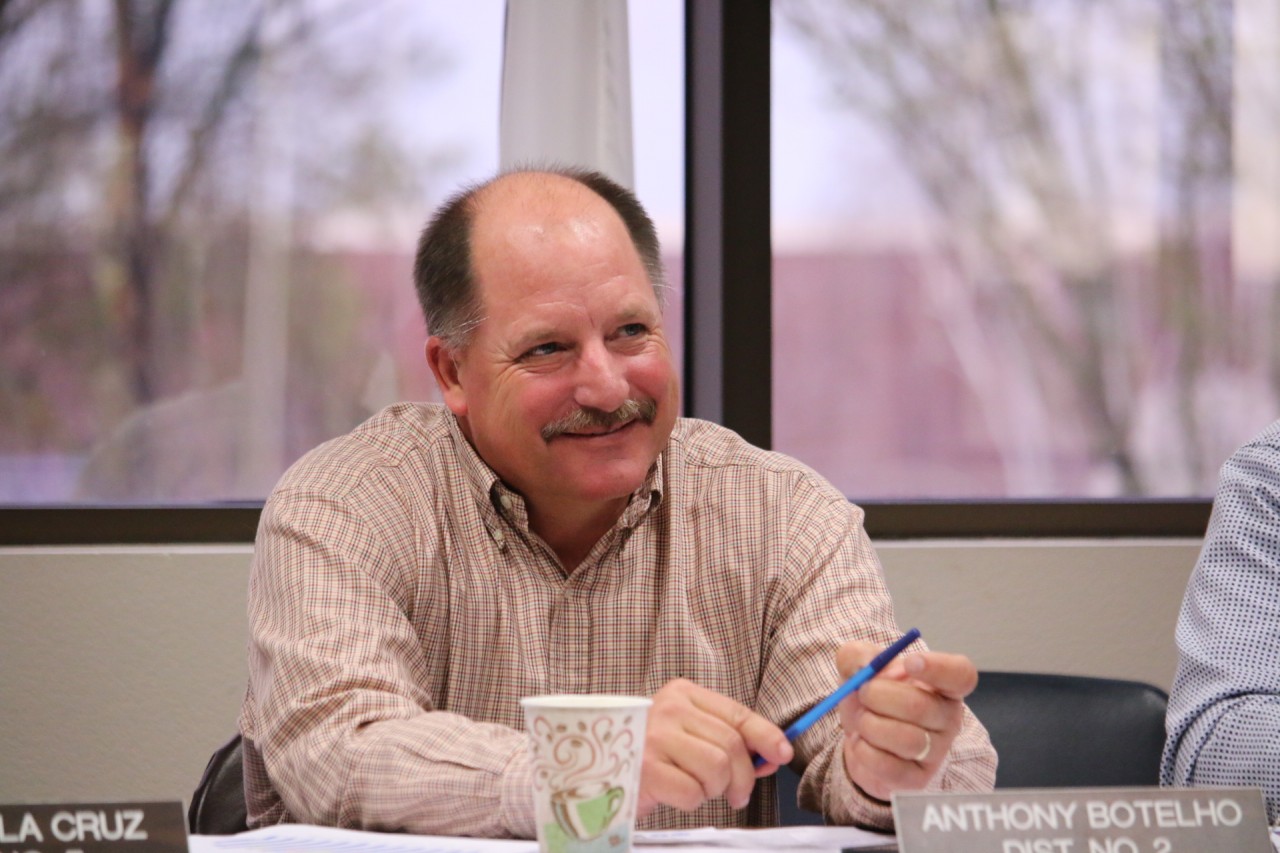
Supervisor Anthony Botelho said he appreciated the detailed breakdown of costs in the budget, but wondered if it included everything.
“I’d rather recognize too much and submit it to make sure we’re covering our costs,” he said. “We have our employee hours (703), and we’re at $41 an hour. With the other response hours, I guess those are volunteer groups at $15 an hour. I just wonder if we’re selling it a little short if you take into consideration the true costs per hour of county employees.”
O’Neill told Botelho that codes were devised on timesheets that calculated hourly rates of various job descriptions. He said he decided on $15 for the volunteers based on the new minimum wage.
“We attach a fair value to that (volunteer work),” he said. “If a volunteer’s doing janitorial work, then we charge at that labor hourly rate. We have to work on that. I just wanted to give you a ballpark figure. A lot of these numbers go towards our match. When there’s a gubernatorial proclamation and funding becomes available, it’s a 75/25 cost-share. Then when the presidential declaration comes in, they (federal government) take on 12 to 15 percent of our 25 percent cost, which brings our cost-share down.”
Staff hours was a convenient way to meet the county’s cost-sharing responsibility, O’Neill said. Botelho asked if OES has a contingency fund to cover unknown or unforeseen costs. O’Neill said OES created a code that is applied to purchases.
“There’s a lot we’re going to have to figure out,” he said. “The roads are a good example. We’re still documenting costs and we’re still getting calls. We’ve also addressed a lot of the concerns from the public and I think the vast majority have been happy with what the county’s been providing, such as pothole repairs. Every notification we’ve received from the public we’ve addressed. If we haven’t, we’ve let them know it’s coming.”
The breakdown of the budget O’Neill submitted included $16,572.82 for purchases of sandbags, signs, heaters, food, dumpsters, and portable toilets. It also included $2,000 in labor for filling sandbags. Public projects totaled $238,479.82 for creek clearing, levee repairs, access road to the levee, pothole and sinkhole repairs. The levee repair and creek clearing alone came to $300,000. Additional costs came to $32,907, and covered county employee and volunteer hours.
You must be logged in to post a comment.